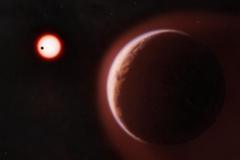
Astronomers have detected an atmosphere around an Earth-like exoplanet located in the habitable zone of its host star. This marks the first confirmed atmospheric detection on a rocky world positioned at a distance where liquid water could exist on its surface.
The discovery emerged through analysis of starlight filtering through the planet's atmosphere as it transits its star. Researchers used spectroscopic data to identify atmospheric signatures. This breakthrough demonstrates that rocky planets in the habitable zone retain atmospheres detectable from Earth, fundamentally reshaping how scientists assess the potential for life on distant worlds.
The habitable zone defines the orbital region where temperatures allow liquid water to persist. Rocky planets in this zone represent prime targets in the search for biosignatures and extraterrestrial life. Previous atmospheric studies focused primarily on massive gas giants and super-Earths. Rocky planets the size of Earth posed detection challenges due to their smaller atmospheric volume and faint signals.
This observation proves that sophisticated spectroscopic techniques can reveal atmospheric composition around smaller worlds. The finding opens new avenues for exoplanet characterization, particularly using the James Webb Space Telescope. Researchers can now target similar rocky planets in habitable zones to search for chemical signatures associated with biological activity, such as oxygen and methane combinations that resist chemical degradation.
The detection required months of observation and advanced data analysis to distinguish planetary signals from stellar noise. This technical achievement validates methodologies that will accelerate future atmospheric studies of Earth-like exoplanets across the galaxy. Agencies including NASA and international space organizations are already adjusting observation schedules to focus on comparable systems.
This discovery brings humanity closer to answering whether Earth-like worlds with stable atmospheres exist beyond our solar system. It establishes a foundation for identifying potentially habitable environments and prioritizing targets for future deep-space missions and biosignature searches.