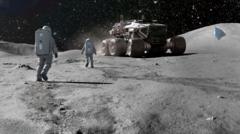
Helium-3, a rare isotope of helium, exists in minuscule quantities on Earth but appears abundant in lunar dust and rocks. Scientists and entrepreneurs see it as a potential energy source for future fusion reactors, which could revolutionize power generation without producing long-lived radioactive waste.
The isotope costs thousands of dollars per liter on Earth due to extreme scarcity. Current supply comes primarily from decommissioned nuclear weapons and aging stockpiles, creating a bottleneck for research and development. Demand projections show sharp increases as fusion technology advances and industries explore clean energy alternatives to fossil fuels.
The moon holds an estimated one million tons of helium-3, concentrated in regolith from billions of years of solar wind exposure. Several aerospace companies and space agencies, including China and private ventures, have outlined lunar mining proposals. Extracting the isotope would require mining surface material, heating it to release trapped gases, and transporting refined helium-3 back to Earth.
Technical and economic hurdles remain substantial. Lunar mining infrastructure doesn't yet exist at scale. Transportation costs from the moon to Earth currently dwarf the value of extracted material. A single lunar mission costs hundreds of millions of dollars, making commercial viability uncertain without dramatic cost reductions in space travel.
Helium-3 fusion reactors themselves exist only in prototype form. No commercial fusion reactor powered by helium-3 currently operates. Proponents argue that once fusion technology matures and launch costs fall, lunar mining becomes economically rational. Critics counter that deuterium-tritium fusion, easier to achieve with terrestrial materials, may render helium-3 unnecessary.
The timeline for commercial lunar helium-3 mining stretches decades into the future. Near-term interest centers on demonstrating extraction feasibility and refining fusion reactor designs. Space agencies view it as a long-term strategic asset. For now, helium-3 remains an aspirational energy source rather than an immediate market reality.