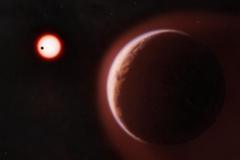
Astronomers detected the first atmosphere surrounding an Earth-sized, rocky planet in the habitable zone of another star system. The discovery marks a watershed moment in exoplanet science, proving that distant worlds similar to Earth can retain atmospheric layers capable of supporting conditions necessary for life.
The planet orbits within its star's habitable zone, the region where temperatures allow liquid water to exist on a surface. Previous observations confirmed habitable-zone planets exist, but detecting atmospheres around small, rocky worlds remained technologically difficult. This breakthrough used advanced spectroscopy to identify atmospheric signatures, revealing gases present in the exoplanet's envelope.
The finding reshapes how scientists approach the search for potentially habitable worlds. Before now, researchers could identify Earth-sized planets in habitable zones but couldn't determine whether they retained atmospheres or lost them to stellar radiation over time. Atmospheric presence becomes critical for habitability, as it regulates temperature, protects surfaces from harmful radiation, and enables the chemical processes associated with life.
The discovery team used data from space-based telescopes to analyze how starlight filtered through the planet's atmosphere, revealing the chemical composition. This technique, called transmission spectroscopy, effectively reads the atmospheric fingerprint by measuring subtle changes in light wavelengths.
This success opens pathways for future observations. Upcoming telescopes with greater sensitivity will allow astronomers to analyze atmospheres on additional Earth-like exoplanets and potentially identify biosignatures, chemical combinations that suggest biological activity. The work connects directly to humanity's broader quest to understand whether life exists beyond Earth and how common habitable worlds actually are across the universe.
The discovery demonstrates that distant, rocky planets can maintain the atmospheric conditions necessary to support life, fundamentally advancing exoplanet characterization.