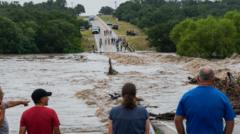
Flash floods have killed at least two people in Texas, striking the same region where devastating floods last year claimed more than 130 lives. The recurring disaster underscores the vulnerability of communities in flood-prone zones and raises questions about disaster preparedness and infrastructure resilience in the state.
The area being hit now experienced catastrophic flooding in the previous year, when a single weather event caused over 130 deaths and widespread destruction. That earlier disaster prompted discussions about improved warning systems and evacuation protocols, yet the region faces another dangerous deluge. Emergency responders are working to rescue residents and search for additional victims as waters continue to rise.
Heavy rainfall has triggered dangerous conditions across multiple counties. Authorities have urged residents in low-lying areas to evacuate immediately, citing the unpredictable nature of flash floods and their rapid onset. Local officials have activated emergency response teams and opened shelters for displaced families.
The repeated flooding of the same community highlights the compounding trauma of disaster-prone regions. Residents who rebuilt after last year's devastation now face another potential loss of homes, possessions, and livelihoods. Infrastructure improvements designed to mitigate flood damage have proven insufficient or incomplete in preventing new disasters.
Climate patterns and geographic factors make certain Texas regions especially susceptible to severe weather events. The frequency of major flooding in this particular area suggests systemic challenges that demand comprehensive solutions beyond reactive emergency response. Insurance availability and affordability have already become issues for residents in repeatedly flooded zones.
State and federal agencies will likely face renewed scrutiny regarding disaster prevention funding and long-term resilience planning. The cycle of destruction and rebuilding in the same locations points to the need for broader climate adaptation strategies and potentially difficult conversations about community relocation or major infrastructure overhauls.