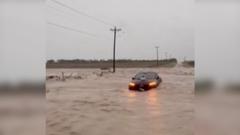
Severe flooding swept across Texas following massive rainstorms, forcing evacuations and triggering water rescue operations in areas already scarred by tragedy. The inundation struck the same region where 25 children and two counselors perished in flooding at Camp Mystic in 2025, intensifying concerns about the region's vulnerability to extreme weather events.
The surge of floodwaters overwhelmed local infrastructure as rainfall accumulated faster than drainage systems could handle. Emergency services mobilized rescue crews to assist stranded residents as water levels rose rapidly across affected communities. The timing of this disaster underscores the escalating frequency and severity of extreme precipitation events in Texas, a pattern linked to climate change intensifying the water cycle.
The Camp Mystic tragedy established this region as a hotspot for catastrophic flooding. That earlier disaster killed 27 people in a single incident, making it one of the deadliest flood events at a summer camp in recent memory. The return of dangerous conditions to the same area within a short timeframe raises questions about disaster preparedness, early warning systems, and whether communities have adequate resources to respond to recurring climate threats.
Texas has experienced increasingly intense rainfall events over the past decade. Climate scientists attribute the pattern to warming ocean temperatures and atmospheric moisture accumulation, which turbocharge storm systems when conditions align. The state's infrastructure, designed for historical precipitation rates, struggles to accommodate these new weather extremes.
Local authorities faced immediate challenges coordinating rescue operations while managing mass evacuations. The convergence of multiple flood events in quick succession tests emergency response capacity and reveals systemic gaps in disaster resilience planning. Residents in flood-prone areas face growing uncertainty about whether their homes and communities can withstand the next deluge, a reality becoming routine rather than exceptional across vulnerable regions.