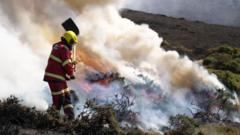
Wildfires forced emergency declarations across the UK on Sunday as fire chiefs confronted extreme operational strain. North Wales and Glossop in Derbyshire's Peak District both saw major incident declarations, signaling the severity of conditions firefighters faced.
The blazes arrived amid a broader pressure wave hitting fire services. Departments reported capacity constraints and mounting calls as heat and dry conditions created perfect combustion scenarios. Fire chiefs issued formal warnings that resources were stretched thin, with crews managing multiple simultaneous incidents across regions.
The Peak District fire, centered in Glossop, posed particular concern given the terrain. Moorland fires in elevated areas prove harder to contain and require more personnel and equipment to control spread. North Wales faced similar challenges with flames advancing through vegetation starved of moisture.
UK fire services operate on tight budgets and staffing levels that leave little margin for surge events. Sunday's dual major incidents tested those limits, forcing mutual aid between services and potentially delaying response times to other emergencies. The simultaneous declarations indicated that local resources alone couldn't manage the load.
Britain's recent dry spell and elevated temperatures created ideal wildfire conditions. Vegetation moisture drops sharply during heat waves, turning moorland and grassland into tinder. A single spark or discarded cigarette can trigger fires that spread rapidly across acres before crews can contain them.
The incidents reinforced a pattern firefighters have warned about for years. Climate conditions are producing longer fire seasons and more intense blazes, yet staffing and funding haven't scaled accordingly. Sunday's emergencies illustrated the gap between demand and capacity.