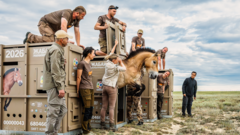
A rare herd of Przewalski's horses completed a 3,000-mile journey across Central Asia to bolster conservation efforts for a species that nearly vanished from Earth. The translocation marks a significant step in restoring wild populations of these stocky, sturdy equines, which zoos and sanctuaries had preserved during decades when they existed only in captivity.
Przewalski's horses hold deep historical weight. Once roaming the steppes of Mongolia and Kazakhstan, the species faced extinction as humans hunted them and converted their habitat. By the mid-20th century, only a handful survived in zoos worldwide. The breed represents one of conservation's most dramatic comebacks: wildlife teams have successfully reintroduced thousands of descendants back into protected reserves across their native range since the 1990s.
This recent journey transported horses to a new reserve, expanding the genetic diversity and population size of wild herds. Such translocations require intensive coordination between international wildlife organizations, governments, and local communities. The animals must endure long-distance travel, acclimatization periods, and monitoring to ensure survival in their new environment.
Przewalski's horses differ visually from domestic horses. They possess a distinctive stocky build, erect mane, and darker coloring adapted to harsh steppe climates. Their very existence today owes entirely to captive breeding programs that prevented complete extinction.
The species remains vulnerable. Current wild populations number roughly 2,000 across several reserves, still far below historical levels. Climate pressures, habitat fragmentation, and limited genetic diversity continue to threaten long-term survival. Ongoing translocations like this one distribute populations across multiple locations, reducing the risk that a single disaster could wipe out the species entirely.
These Przewalski's horses now join existing herds in their ancestral homeland, carrying forward a conservation narrative that proves species recovery remains possible even after extinction seemed inevitable.