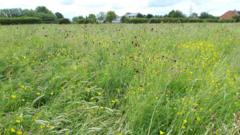
A rare floodplain meadow has been transferred to a wildlife trust, marking a conservation win for one of England's most endangered habitats. Floodplain meadows rank among the scarcest ecosystems in the country, with only fragmented patches remaining after centuries of agricultural intensification and land conversion.
The meadow's transfer strengthens habitat protection at a time when these wetland grasslands have disappeared from roughly 95 percent of their historical range. These environments support specialized plant and animal communities adapted to seasonal flooding, including wildflowers and insects found nowhere else in Britain.
Wildlife trusts across England manage similar restoration efforts, acquiring degraded land and rewilding it to restore ecological function. This particular transfer expands protected habitat corridors and creates space for species recovery. Floodplain meadows provide essential ecosystem services beyond biodiversity: they naturally slow water runoff during heavy rains, reduce downstream flood risk, and improve water quality by filtering pollutants.
The acquisition reflects growing momentum in English conservation toward rewilding initiatives and habitat restoration. Government funding schemes like the Environmental Stewardship Program have incentivized landowner participation in habitat creation. However, conservation groups argue that current protection levels remain insufficient given the accelerating pace of habitat loss.
Restoring floodplain meadows requires long-term commitment. Recovery timelines span decades as soils rebuild their seed banks and specialist species recolonize. The trust plans management practices including controlled grazing and seasonal water management to mimic natural flood dynamics.
This transfer demonstrates how partnership between conservation organizations, landowners, and government bodies can reverse habitat decline. Each restored meadow increases resilience for vulnerable species and strengthens ecological networks across fragmented landscapes.