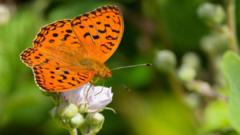
The high brown fritillary, one of Britain's rarest butterflies, depends on an unlikely ally: grazing cattle. This species requires specific plants to survive, particularly bracken for cover and bird's-foot trefoil violet for caterpillar food sources. The challenge lies in balance. Too much bracken chokes out the violets. Too little leaves the butterflies exposed to predators.
Farmers managing conservation sites have discovered that controlled grazing works. Cattle naturally keep bracken in check while maintaining the delicate habitat mosaic these butterflies need. The approach beats mechanical clearing, which damages soil and requires constant upkeep.
The high brown fritillary has vanished from most of lowland Britain. Today only scattered populations survive in southwestern England and Wales, clinging to a handful of protected reserves. Climate change adds pressure. Warmer, drier summers stress the violets during peak caterpillar season.
Conservation groups now work directly with landowners to implement grazing strategies tailored to butterfly ecology. Some reserves use sheep instead of cattle, adjusting stocking densities season by season. The goal remains the same: create pockets of heterogeneous habitat where bracken density stays moderate and violets flourish.
This model extends beyond fritillaries. Similar techniques help other species dependent on semi-natural grasslands. Britain's biodiversity crisis means such practical partnerships between farming and conservation grow increasingly vital. The high brown fritillary represents a wider lesson: ecosystems often need active management, not abandonment. Sometimes that management looks like what humans have done for centuries. It just needs fine-tuning.