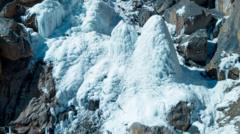
Mountain communities in the Indian Himalayas have engineered a low-tech solution to water scarcity. Villagers construct artificial ice pyramids, or "ice stupas," that store frozen water through winter and release it as spring melt arrives precisely when crops need irrigation most.
The innovation addresses a critical timing problem. Natural glaciers in the region are retreating due to climate change, leaving villages without reliable spring runoff during planting season. Artificial glaciers solve this by concentrating meltwater into manageable quantities at predictable times.
The process works through passive freezing. Engineers channel water from streams and springs through pipes positioned high on mountainsides during winter months. As temperatures drop below freezing, the water accumulates in cone-shaped structures, building pyramids of ice sometimes reaching 50 meters high. When spring arrives and temperatures rise, the ice melts slowly downslope toward agricultural fields below.
Villages in Ladakh and other Himalayan regions have adopted this method after its success in Leh district over the past decade. Farmers report reliable water access during critical growth periods, improving crop yields without expensive infrastructure or external resources.
The approach requires minimal ongoing maintenance and works within local climatic conditions rather than fighting them. Communities source materials locally and rely on gravity-fed systems that need no electricity.
Climate adaptation experts recognize ice stupas as practical resilience in vulnerable regions facing glacial retreat. The technique doesn't reverse climate impacts but buys time and water security for subsistence farming communities dependent on seasonal precipitation patterns. As traditional glaciers continue shrinking across the Himalayas, these human-engineered alternatives represent pragmatic survival strategies that villages have tested and refined for years.