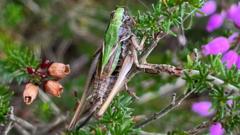
Volunteer-led conservation efforts are breathing new life into populations of a rare bog insect facing extinction across the UK. The initiative focuses on habitat restoration in wetland areas where the species has vanished or declined sharply over recent decades.
Participating volunteers undertake hands-on work to recreate the boggy conditions these insects require. Drained wetlands pose the primary threat to the species, as industrial peat extraction and agricultural conversion have destroyed critical breeding grounds. By rewetting degraded sites and removing invasive plant species, volunteers directly improve conditions for reproduction and survival.
The project represents a shift toward community-driven conservation. Rather than relying solely on institutional funding and professional ecologists, organizers mobilize local volunteers who gain direct involvement in species recovery. This approach builds public investment in biodiversity while distributing labor-intensive restoration work across a larger workforce.
Scientists monitor insect populations at treated sites to measure whether habitat improvements translate to actual population growth. Early data indicates promising results, with numbers rising at several locations following volunteer interventions.
Long-term ambitions extend beyond stabilizing existing populations. Organizers plan to reintroduce the insect to historical sites where it once thrived but has since disappeared. Successful reintroduction requires not only habitat restoration but also the establishment of stable breeding populations at source sites, allowing for future translocation efforts.
The initiative illustrates how endangered species recovery increasingly depends on scaling conservation action through public participation. Bog insects occupy narrow ecological niches vulnerable to habitat loss, yet their recovery proves achievable when communities commit resources to restoration. As wetland conservation gains momentum across the UK, similar volunteer projects may become essential tools for reversing insect declines tied to landscape degradation.