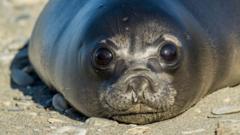
A bird flu outbreak has devastated a southern elephant seal population on one of Earth's most remote locations. Scientists report that H5N1 killed more than 13,000 seal pups on Heard Island, an Australian territory in the Southern Ocean. The die-off represents over 75 percent of the pups born on the island that year.
The H5N1 strain, which has circulated globally in wild birds and some mammals for years, proved catastrophic in this isolated ecosystem. Researchers documented the outbreak after noticing an unusual spike in pup mortality during breeding season. The virus spread rapidly through the densely packed colony, with infected animals showing respiratory distress before death.
Heard Island hosts one of the world's largest southern elephant seal populations. The colony typically produces roughly 16,000 pups annually. This outbreak wiped out the majority of a single cohort, creating a generational bottleneck that scientists worry could affect population dynamics for years.
The deaths highlight how H5N1 continues mutating and jumping between species. Previous H5N1 cases in marine mammals remained isolated. This mass mortality event on Heard Island suggests the virus has adapted to spread efficiently among seals, raising questions about its evolution and future pandemic potential in other marine species.
The remote location limited researchers' ability to conduct in-depth field investigations immediately. Scientists relied on satellite data and limited ground surveys to assess the scale. Understanding exactly how transmission occurred and whether surviving pups developed immunity will require continued monitoring.
This outbreak underscores how climate change and human activity are breaking down species barriers. Warming oceans may alter bird migration patterns and push infected wildlife into new territories. The convergence of stressed marine ecosystems and evolving pathogens creates unpredictable risks for biodiversity globally.