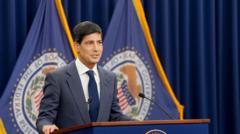
The Federal Reserve kept its benchmark interest rate in a holding pattern at 3.5% to 3.75%, marking Kevin Warsh's inaugural decision since taking the helm of the central bank. The decision reflects sustained caution amid geopolitical tensions tied to potential shifts in US-Iran relations under the Trump administration.
Warsh, a former investment banker and Trump-aligned Fed chair, signaled the central bank's reluctance to move rates in either direction while policy uncertainty persists. The Fed's pause extends its recent pattern of stability after a series of rate cuts in 2024 aimed at supporting economic growth following inflation peaks.
The holding decision arrives as markets grapple with questions about how Trump's foreign policy positions, particularly regarding Iranian negotiations, could ripple through energy markets and broader economic conditions. Oil prices and inflation expectations remain tethered to geopolitical outcomes, making traditional rate-setting calculations more fraught.
Warsh's appointment represented a significant shift in Fed leadership philosophy. Unlike his predecessor, Warsh brings a distinctly pro-business orientation and closer ties to Republican circles. His measured approach in this first meeting suggests he's prioritizing stability over aggressive policy shifts, despite potential pressure from the Trump White House to lower rates further.
The central bank faces competing pressures. Labor market strength continues, while inflation metrics show mixed signals. Holding rates steady allows policymakers time to assess whether Trump's potential tariff policies and diplomatic maneuvers create lasting inflationary pressures or temporary market volatility.
Fed communication focused on data dependency rather than preset rate paths. Officials avoided explicit guidance on future moves, preferring flexibility as economic conditions and international relations evolve. This approach buys time but frustrates markets seeking clearer signals.
The decision underscores how geopolitical uncertainty now constrains monetary policy in ways traditional Fed playbooks didn't anticipate. Warsh's leadership enters a period where central banking intersects directly with national security calculations, a departure from the post-2008 era's focus on pure economic metrics.