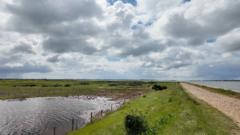
Hampshire's Langstone Harbour, designated as a Ramsar wetland of international importance, faces imminent collapse as its sea defences deteriorate. The 1,500-hectare reserve, home to overwintering wildfowl and migratory birds, sits behind aging coastal barriers that engineers now classify as inadequate against rising sea levels and storm surge.
The reserve protects critical habitat for thousands of birds, including dunlin, grey plover, and pintail, which rely on the site during winter months and migration periods. Without functional defences, saltwater intrusion would transform freshwater marshes and mudflats into open water, obliterating the specialized feeding and roosting grounds these species depend on for survival.
Local conservation groups warn that repair costs exceed available funding. Hampshire County Council has identified the defences as a priority, but replacement infrastructure requires millions in investment. The timing intensifies pressure on UK environmental bodies as coastal erosion accelerates nationwide. Other protected sites face similar vulnerabilities, suggesting a systemic crisis across Britain's nature reserves.
Rising sea levels driven by climate change compound the problem. Storm events grow more frequent and severe, placing unprecedented strain on defences built decades ago for different environmental conditions. Engineers estimate the Langstone barriers have less than a decade of viable function remaining without major renovation.
Conservation organizations argue that nature-based solutions, including managed realignment and salt marsh restoration, could provide cost-effective alternatives to traditional hard defences. These approaches would allow controlled tidal access while maintaining habitat diversity.
The reserve supports tens of thousands of birds annually, making its loss a significant blow to European flyways. Without urgent intervention, Langstone Harbour joins a growing list of internationally protected sites facing extinction through neglect.