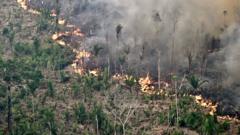
Tropical rainforest loss decelerated in the past year, new data shows, offering a rare bright spot in conservation efforts. Yet scientists caution the gains remain fragile and could evaporate entirely if El Niño-driven fires intensify across vulnerable regions.
The slowdown marks a reversal of decades-long trends that saw accelerating deforestation across the Amazon, Southeast Asia, and Central Africa. Researchers attribute the pause to stricter enforcement of environmental regulations in Brazil, reduced agricultural expansion in certain zones, and international pressure on commodity-driven clearing. Forest monitoring agencies detected smaller year-over-year losses across multiple tropical nations, suggesting policy interventions are finally gaining traction.
But the analysis carries a significant caveat. El Niño conditions, which increase drought and wildfire risk across tropical forests, pose an immediate threat to conservation gains. The climate pattern drives hotter, drier conditions that make forests tinder-dry and vulnerable to both natural and human-set fires. Scientists point to recent fire seasons in Indonesia and the Amazon as cautionary tales, where uncontrolled blazes consumed millions of hectares in single seasons and released massive carbon stores into the atmosphere.
The window for consolidating these losses remains narrow. Deforestation drivers—cattle ranching, soy cultivation, logging, and development—remain economically powerful across deforesting nations. Without sustained investment in forest protection and enforcement, the slowdown could reverse quickly. El Niño cycles historically trigger spikes in forest loss, as fire-weakened trees become easier to clear and replant.
Conservationists now face dual pressure: cementing the regulatory and market shifts that slowed deforestation while bracing for potential El Niño fires that could undermine years of progress. The next twelve to eighteen months will prove decisive for tropical forest futures.