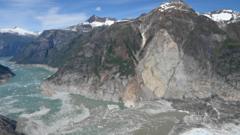
A glacier collapse in Alaska generated the second-largest tsunami ever recorded, new research reveals. Scientists studying the 2015 event at Icy Bay found that the wave reached heights of nearly 200 feet, surpassed only by a 1958 tsunami in Lituya Bay, also in Alaska.
The trigger was straightforward. Warming temperatures accelerated the melting of Hubbard Glacier, destabilizing the ice mass above Icy Bay. When the glacier finally gave way, it displaced an enormous volume of water, sending waves across the bay with devastating force. Researchers traced the connection directly to climate change driving the glacier's retreat.
The findings carry troubling implications. As global temperatures climb, more glaciers worldwide face similar melt-driven instability. Alaska alone hosts thousands of tidewater glaciers, many sitting above populated bays and near communities. The risk profile for sudden, catastrophic events is shifting upward.
Scientists modeled future scenarios and found the danger intensifying. Continued warming will accelerate glacier retreat across the region, increasing the frequency of calving events that trigger megatsunami. Some glaciers currently stable could destabilize within decades. Indigenous communities in Southeast Alaska, already vulnerable to rising sea levels, now face an additional hazard from sudden displacement waves.
The research underscores a lesser-known climate threat. While Arctic melting and sea-level rise dominate climate conversations, glacier-triggered tsunamis offer a sharp reminder that warming reshapes coastal risks in multiple ways. A single calving event can move more water than months of gradual sea-level rise, creating acute dangers for specific regions.
The 2015 Icy Bay event caused no deaths, partly because the region remains sparsely populated. The same wave in a more densely developed bay could prove catastrophic. As Hubbard and neighboring glaciers continue retreating, monitoring these systems becomes essential.