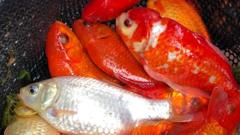
The Environment Agency is hunting for dumped goldfish in a British lake after the abandoned pets began threatening native carp populations. Goldfish released into freshwater ecosystems grow significantly larger than their ornamental tank counterparts and become aggressive predators, consuming vast quantities of native fish eggs and larvae.
The agency launched an official removal campaign to protect vulnerable carp species and maintain ecological balance. Dumped goldfish compete directly with native fish for food and habitat while introducing diseases that spread through wild populations. A single released goldfish can live for decades in natural water systems, multiplying the damage over time.
This problem extends across the UK, where thousands of unwanted aquarium fish end up in lakes and rivers annually. Goldfish possess remarkable adaptability to outdoor environments, thriving in conditions that kill other pet species. Their rapid reproduction and predatory nature make them particularly destructive invasive species.
The Environment Agency urges aquarium owners to never release fish into the wild, no matter the circumstances. Responsible disposal options include returning fish to pet shops, donating to other aquarium enthusiasts, or euthanizing them humanely. Some local authorities operate surrender programs specifically for unwanted pets.
Conservation experts warn that invasive goldfish cause cascading ecological damage. They destabilize food webs, reduce biodiversity, and degrade water quality through their feeding behavior and waste. Native carp and other species lack evolutionary defenses against these introduced predators, leaving populations vulnerable to rapid decline.
The agency's removal effort combines netting operations with community reporting systems. Members of the public can identify problem goldfish populations and alert officials to new infestations. This dual approach addresses both existing invasions and prevents future introductions.
Fish dumping represents a broader aquarium industry problem. Pet ownership requires long-term commitment, but many owners abandon fish when they become inconvenient. Education campaigns now emphasize the ecological consequences of releasing exotic species into natural waterways.