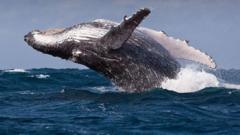
Shipping companies have rerouted thousands of vessels around the Cape of Good Hope since 2023 to dodge Middle East conflicts, adding weeks to journeys and billions in costs. Scientists now warn this detour carries an overlooked consequence for whales traveling the same waters.
The longer routes funnel commercial traffic through migration corridors off southern Africa where endangered species congregate. Increased ship strikes pose a direct threat to already vulnerable populations, particularly humpback and fin whales that transit the region seasonally.
The rerouting began after Houthi attacks on cargo ships in the Red Sea and Suez Canal forced operators to choose the longer Cape route. Major carriers including Maersk and MSC diverted thousands of container ships, adding roughly 10 extra days per voyage and costing the industry an estimated $1 billion weekly in fuel and labor.
That economic burden now collides with conservation concerns. Researchers tracking whale populations report elevated collision risk in Cape waters where vessel traffic has intensified. The whales, already stressed by climate change and reduced food availability, face added mortality pressure from a surge in passing cargo ships.
The dilemma reflects a broader environmental cost of geopolitical instability rarely quantified in shipping economics. Regulators in South Africa and international maritime bodies have begun discussions on mandatory speed restrictions or designated shipping lanes that might reduce whale strikes while maintaining commercial efficiency.
No formal agreement exists yet. Environmental groups push for immediate mitigation measures, while shipping operators resist further operational constraints on an already financially strained industry. The situation exposes how distant global conflicts reshape marine ecosystems through unintended consequences, leaving whales caught between two human crises.