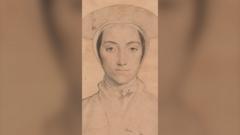
Researchers using facial recognition algorithms have cast doubt on the authenticity of portrait paintings long attributed to Anne Boleyn, the second wife of Henry VIII. The analysis examined images held in major collections, including the National Portrait Gallery and the Royal Collection, questioning whether these iconic depictions actually captured the Tudor queen's likeness.
The algorithmic study compared anatomical proportions and facial features across attributed portraits, flagging inconsistencies that suggest some paintings may have been mislabeled or created well after Boleyn's 1536 execution. Facial recognition technology identified variations too significant to represent the same person, particularly in bone structure and facial geometry.
This finding upends centuries of art historical consensus. The portraits in question have shaped how millions visualize Boleyn, influencing everything from academic scholarship to popular culture representations in shows like "The Tudors." Museums have relied on these images for exhibitions and educational materials, assuming provenance tracing back through royal collections guaranteed authenticity.
The work highlights both the promise and limits of AI in art authentication. While algorithms excel at detecting mathematical inconsistencies in facial proportion, they cannot replace expert analysis of paint composition, canvas age, or historical documentation. Art historians stress that technology serves as a diagnostic tool, not final authority.
No contemporary portraits of Anne Boleyn are definitively verified to exist. She lived before photography, and most images emerge from later Tudor era copies or imaginative reconstructions. This research suggests art institutions must revisit their attribution practices and may need to relabel or deaccession works lacking stronger documentation.
The study raises broader questions about how we preserve historical identity. Without reliable visual records, Boleyn remains partially unknowable, filtered through the agendas of those who painted and preserved her memory.
THE TAKEAWAY: AI facial recognition challenges long-held assumptions about Tudor portraiture, forcing museums to reconsider what they actually know about Anne Boleyn's appearance.