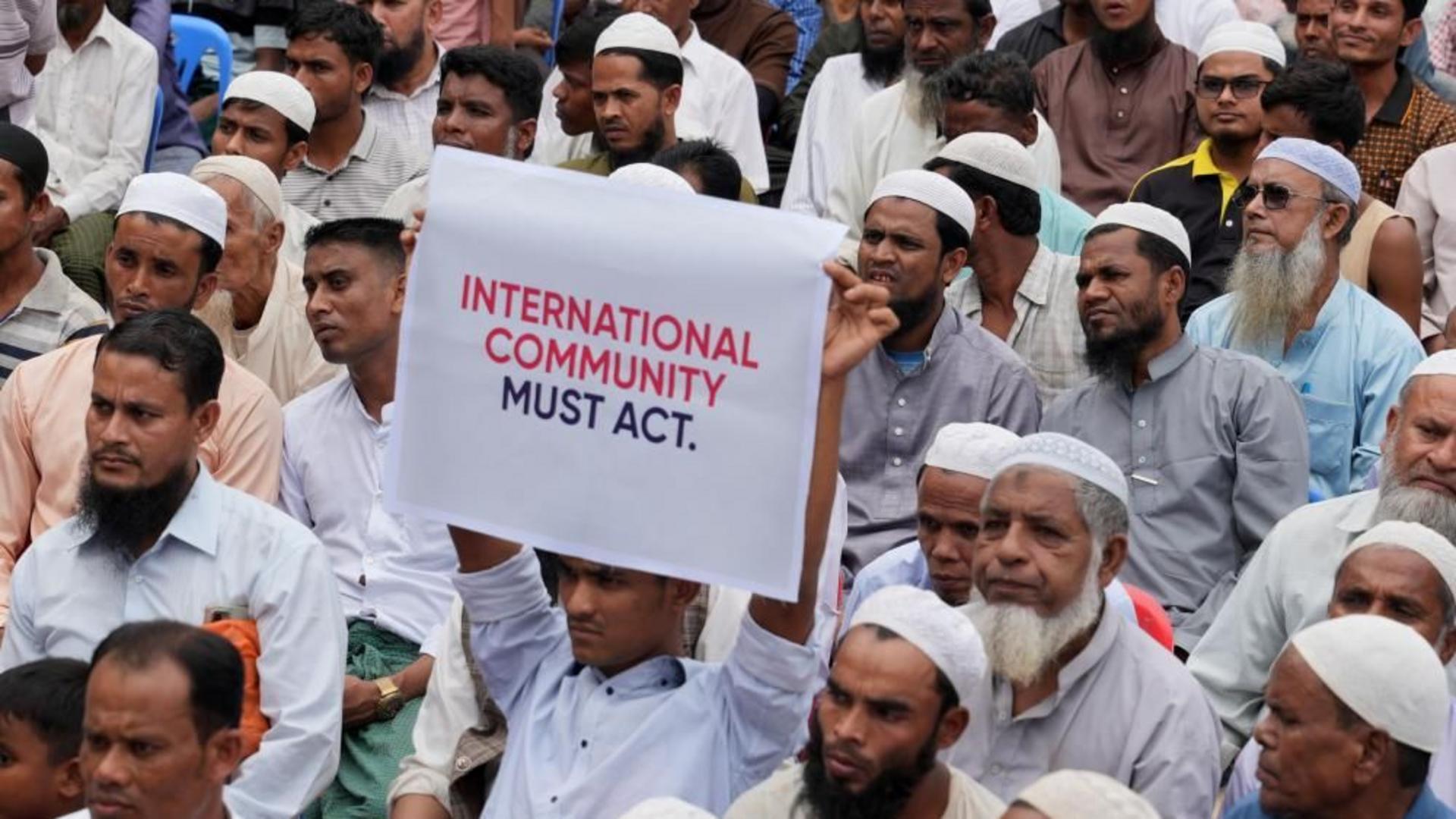
The International Court of Justice ruled Thursday that Myanmar committed genocide against the Rohingya minority, marking the first time a state has been found guilty of genocide by an international court.
ICJ President Yuji Iwasawa found that Myanmar had the "intention to destroy" a substantial part of the Rohingya population. The court determined that around 10,000 Rohingya were "violently killed" during 2017 military clearance operations in Rakhine State, while more than 700,000 fled to Bangladesh.
Iwasawa said Myanmar's military engaged in "indiscriminate" killings, executions of men, "widespread" sexual violence, attacks on children and deliberate burning of Rohingya homes. The court also found that Myanmar destroyed evidence by burning or disposing of bodies and bulldozing cleared sites.
The verdict passed by a majority of nine votes to six among a panel of judges from around the world. The ICJ said the "genocidal intent is the only reasonable inference that can be drawn from the evidence."
Myanmar denied the charges, arguing its forces had responded to attacks by armed groups including the Arkan Rohingya Salvation Army. Government representative Ko Ko Hlaing told the ICJ in January that the country "was not obliged to remain idle and allow terrorists to have free reign." He said he had "no comment" following Thursday's verdict.
The court found that pre-2017 policies discriminating against Rohingya, including limits on married couples' children, aimed to erode their rights. The ICJ ordered Myanmar to pay proportionate reparations but said an exact figure would be determined later.
The ICJ is not a criminal court and cannot imprison military officials. Its enforcement relies on the UN Security Council and political pressure.