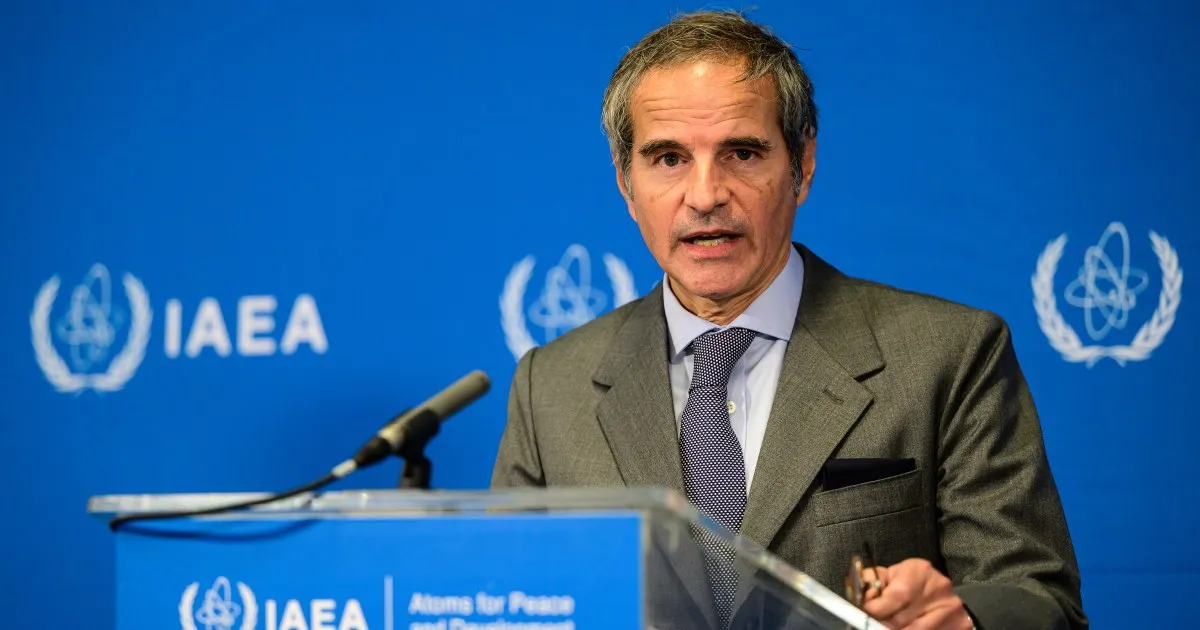
Rafael Grossi, chief of the International Atomic Energy Agency, is running for UN secretary-general but faces significant obstacles despite backing from the Trump administration and Argentina's President Javier Milei.
Grossi finished second in the latest UN Security Council straw poll with nine "encourage" votes and four "discourage" votes, behind Costa Rica's Rebeca Grynspan. Eight candidates remain in the race to replace Antonio Guterres, whose term ends December 31.
The 65-year-old Argentinian diplomat has built a reputation as a crisis manager. Since becoming IAEA director general in 2019, he has led hands-on diplomatic efforts in war zones, including personally overseeing inspections at Ukraine's Zaporizhzhia and Chernobyl nuclear plants after Russia's 2022 invasion. Jan Wouters, a professor of international law at KU Leuven, said Grossi "transformed the technical watchdog into a highly visible, proactive diplomatic actor" through "constant shuttle diplomacy."
Grossi faces two major hurdles. First, Russia and China, both permanent Security Council members with veto power, are unlikely to support a candidate closely aligned with Washington. The South China Morning Post reported that Beijing has ruled out Grossi and will instead back Grynspan. Russia views him as having overstepped his authority as IAEA head. Iran, while not a Security Council member, has also vocally opposed his nomination, accusing the IAEA of bias in its reporting on Iran's nuclear programme.
Second, Grossi's association with Trump and especially with Milei threatens his candidacy. Milei has called the UN "useless" and its diplomats "fatally arrogant parasites," framing international institutions as threats to national sovereignty. Trump has also criticized the UN extensively. Ezequiel Jimenez Martinez, an adjunct professor at Pompeu Fabra Law Faculty in Barcelona, said this alignment means Grossi is seen as someone who could advance a UN agenda "shrinking" the institution's structure through mergers and refocusing it on security rather than development.
To win, Grossi needs at least nine votes from the 15-member Security Council with no vetoes from its five permanent members, then approval from the 193-member General Assembly. His technical competence alone is insufficient. Observers say his vague calls for UN reform while failing to elaborate on safeguards make passage unlikely.