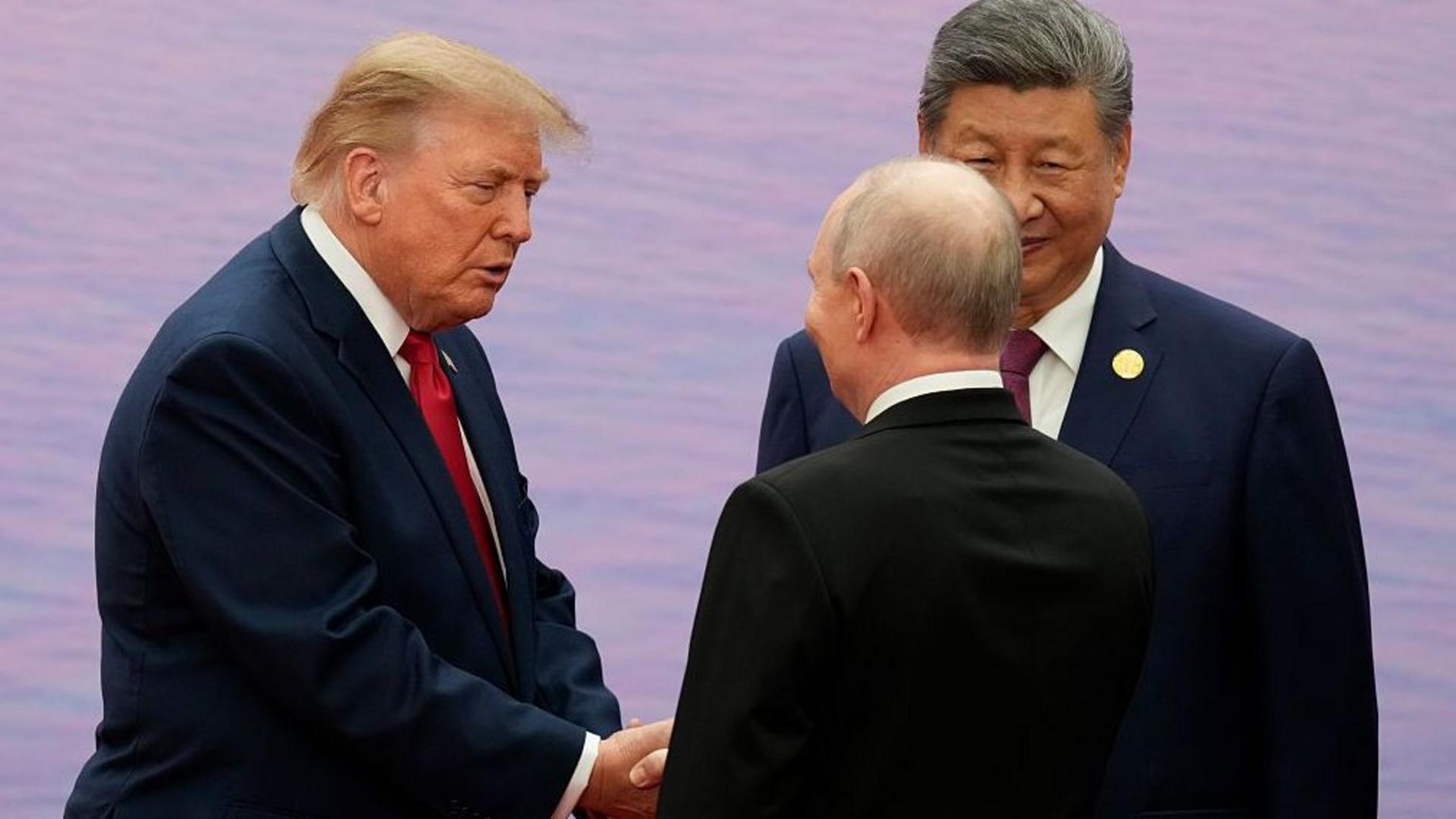
Donald Trump, Vladimir Putin and Xi Jinping are meeting for a historic trilateral summit in Shenzhen, with the Chinese leader orchestrating what he views as a demonstration of Beijing's grip on global economics and world politics.
Xi has positioned the meeting as a moment where China, rather than Western capitals, shapes international order. But the summit presents complications for him. China wishes to avoid discussing the Ukraine war, now in its fourth year, since Xi must balance his relationship with Putin against damage to China's ties with Europe, a key export market. Beijing maintains it is neutral on the conflict while calling for negotiations.
Donald Trump has signaled he wants the three leaders to discuss limiting global nuclear weapons supplies. The US and Russia hold the world's largest stockpiles. China is rapidly expanding its own arsenal, and Trump seeks to include Beijing in any new agreement. Xi has resisted, arguing his arsenal is considerably smaller than Washington and Moscow's, making equal limits unfair. China also believes it should have freedom to develop nuclear capabilities.
Xi wants to control the meeting's presentation through carefully choreographed speeches and set talking points. But he faces two unpredictable leaders. Trump has already threatened to go off script, and both he and Putin have their own agendas, creating a risk that they dominate the meeting and Xi appears as host rather than architect.
For Xi, this moment matters domestically. China faces a property crisis that has dented consumer confidence, heavy local government debt, slowed manufacturing and youth unemployment affecting one in five young people. Xi heads toward next year's Communist Party Congress, where he is expected to secure a historic fourth term. The summit allows him to portray China's century of humiliation as over and position his country as increasingly shaping a new global era.