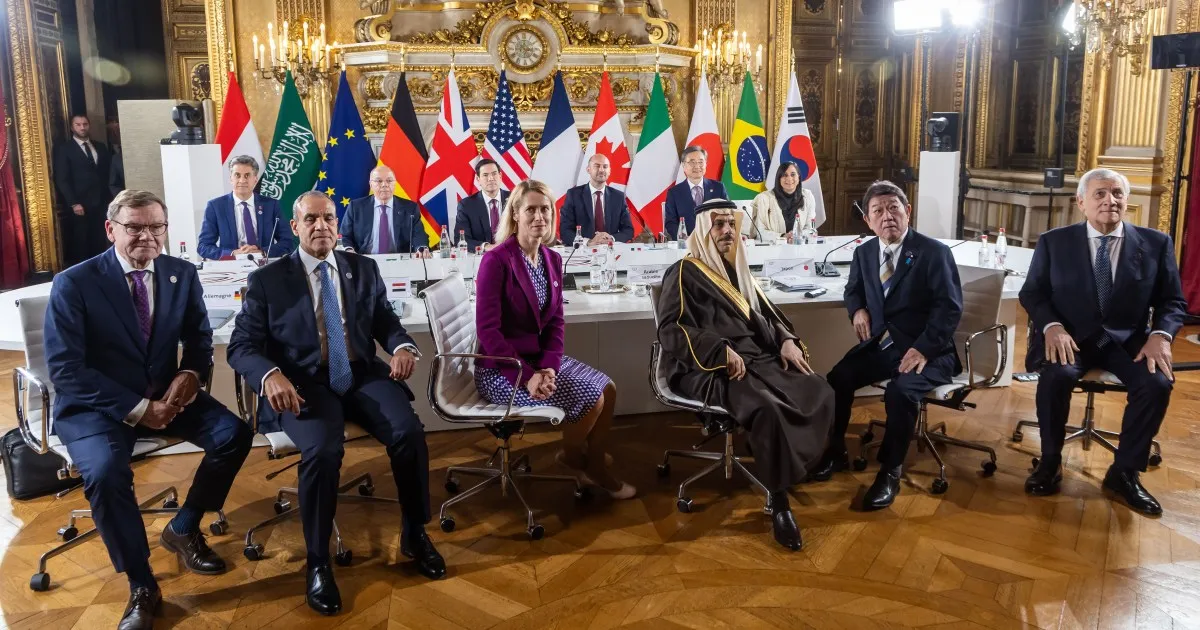
German Foreign Minister Johann Wadephul's message to US Secretary of State Marco Rubio could hardly be clearer: 'Europe belongs at this table. There can be no solution without Europe – only with Europe.' This stark declaration, made Monday in Paris during G7 foreign ministers talks, cuts to the heart of a troubling shift in how the United States is approaching the Russia-Ukraine conflict. As US-mediated peace talks begin in Abu Dhabi on Tuesday and Wednesday, Europe's insistence on being heard is not merely diplomatic protocol—it is an existential necessity.
The timing of Rubio's first meeting with allies since last week's midterm elections matters enormously. The Republican Party's 'stunning losses' at the ballot box have left Washington's allies deeply anxious about President Trump's rhetoric regarding a 'new security architecture for Europe.' That anxiety is justified. When one superpower begins unilaterally redesigning the security framework of an entire continent without meaningful input from the nations most affected, the foundations of international order begin to crumble. Wadephul was right to state bluntly: 'It is certainly neither necessary, nor right, nor appropriate to make a fundamental change' to Europe's security architecture.
Ukraine's own voice in these negotiations cannot be sidelined either. Foreign Minister Andrii Sybiha's statement—'No one has the right to decide our fate behind our backs'—echoes Wadephul's concern. Sybiha will join talks on Ukraine during Tuesday's Paris meeting, ensuring that the nation bearing the brunt of Russian aggression maintains its seat at the table. Meanwhile, Wadephul's assessment of Moscow's negotiating position remains sobering: he sees 'no substantial contribution whatsoever toward negotiations gaining any serious momentum' from Russia, which continues attacking Ukraine's civilian infrastructure and making 'maximalist demands.'
The Abu Dhabi talks must demonstrate whether Russia is 'genuinely prepared to negotiate' or whether they are merely a 'negotiation show,' as Wadephul warned. This is the critical test. If Washington allows itself to be sidelined by a facade of diplomacy while excluding the very European allies whose security depends on the outcome, it will have abandoned the multilateral framework that has defined relations among G7 members 'for decades.'
As Al Jazeera's reporting noted, the Paris meeting ends Tuesday with 'little clarity on US policy after the midterm elections.' That clarity must come soon, and it must include genuine European partnership. The United States cannot negotiate away European security interests to broker a deal. The future of transatlantic relations—and the credibility of American leadership itself—depends on recognizing that Europe does, indeed, belong at this table. Any peace deal that excludes European voices will be a false peace.