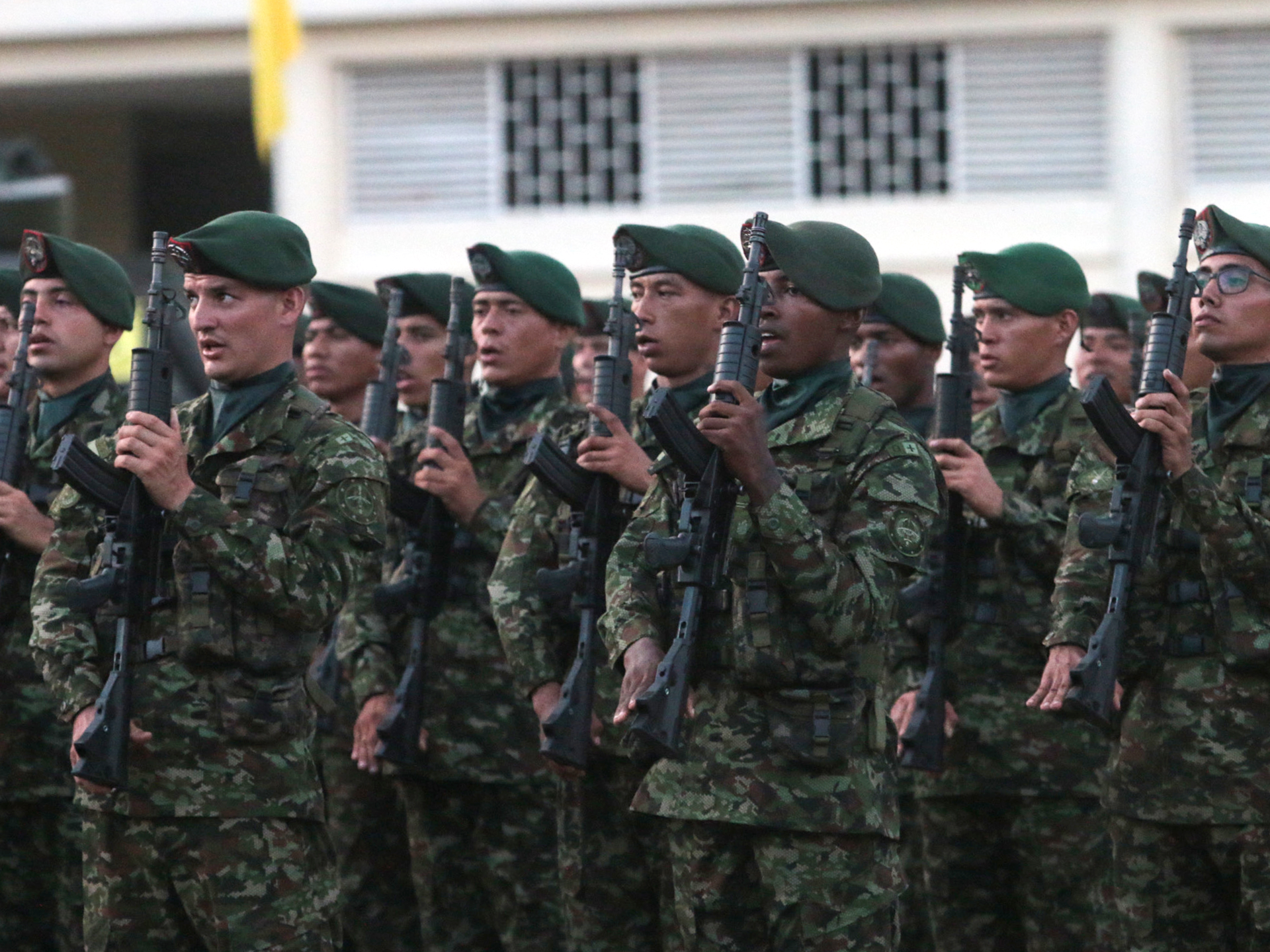
Three soldiers dead and at least 16 wounded in a drone attack on a military base in Santa Rosa del Sur. A military base in Tolima province targeted with makeshift missiles, killing four civilians including a two-month-old baby. Police in Cucuta attacked repeatedly with remotely activated bombs. These are not isolated incidents—they are symptoms of a strategy failing in real time. Since President Abelardo de la Espriella took office in August, violence has intensified across rural Colombia, and his hardline approach appears to be provoking exactly the escalation it promised to prevent.
The president's response has been predictable: tough talk and tougher tactics. "Those who were behind this attack… will have nowhere to hide," de la Espriella wrote on X following Saturday's drone strike in Santa Rosa del Sur. He has cancelled peace talks with rebel groups, authorized more air strikes, deployed additional troops, and created joint task forces to defend strategic assets like the Caribbean-to-central pipeline. The logic is straightforward—armed groups used previous ceasefires to consolidate power in rural areas where they tax businesses and profit from drug trafficking, so confrontation must be the answer.
The numbers tell a different story. State forces and illegal armed groups carried out 34 attacks with bombs or explosives in the four weeks to October 16—a 9 percent increase on last year's four-week average, according to ACLED, which monitors armed conflicts. This is not a temporary spike. This is the trajectory of a confrontational policy meeting organized resistance from groups including the Gulf Clan, the National Liberation Army, and splinter factions from the Revolutionary Armed Forces of Colombia that have fought over former FARC territory since the 2016 peace deal demobilized more than 14,000 fighters.
De la Espriella inherited a complicated security situation, and no Colombian president faces easy choices in regions contested by multiple armed groups. But there is a critical difference between firmness and provocation. When a government abandons negotiation entirely and ramps up military operations, non-state actors respond rationally by escalating attacks on security forces. The drone that struck Santa Rosa del Sur, the improvised missiles in Tolima, the bombs in Cucuta—these are not signs of weakness in the opposition. They are signs of an escalation cycle that military superiority alone cannot resolve.
Colombia needs security, but it also needs strategy grounded in reality. A conservative president elected on law-and-order promises has every incentive to pursue confrontation, yet the evidence from the past three months suggests this approach is making rural Colombians less safe, not more. Before de la Espriella tightens his grip further, he should ask whether his current course is actually weakening armed groups or simply hardening them. The body count suggests the latter.