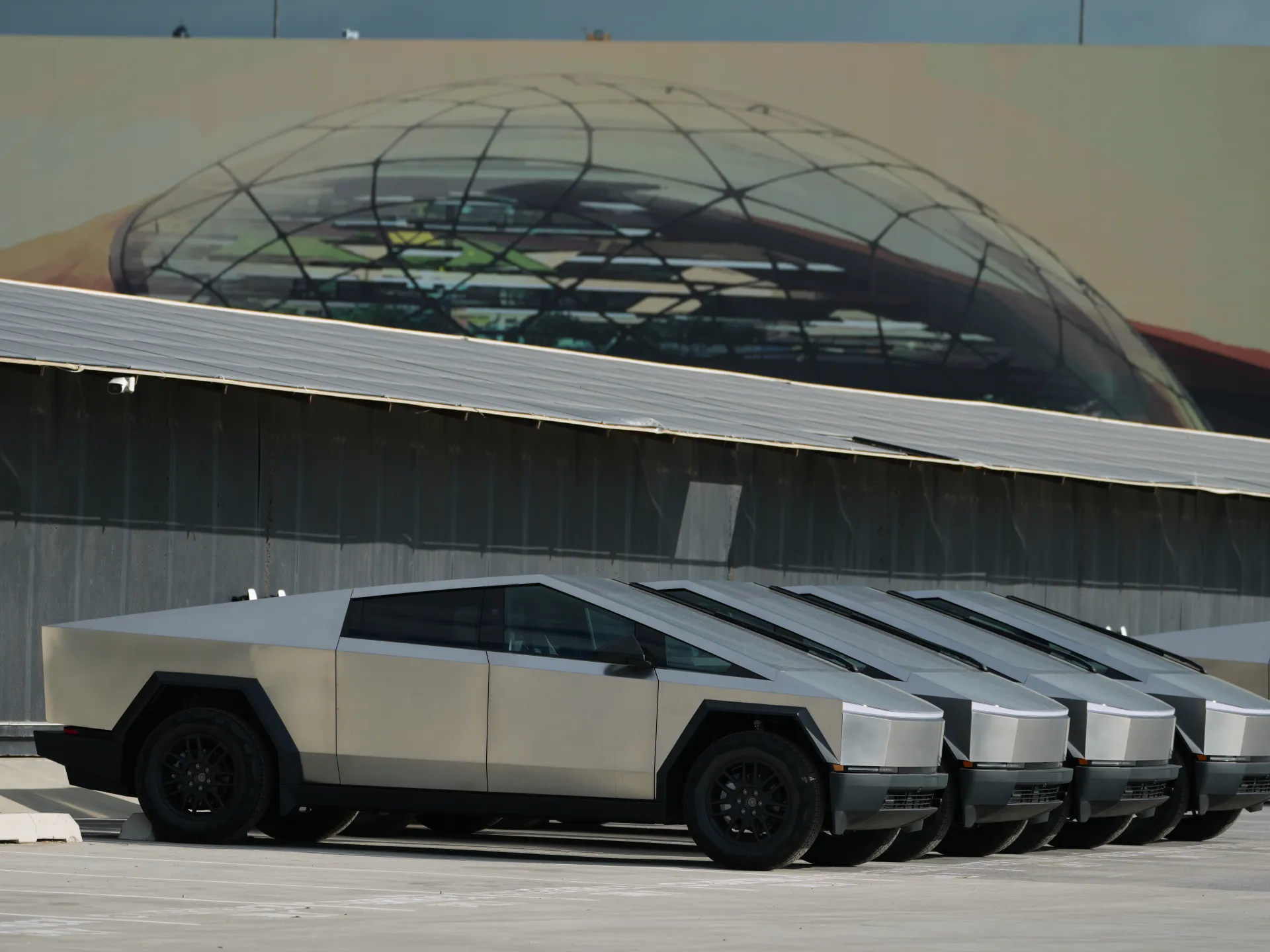
When Elon Musk announced the Cybertruck in 2019, he was betting big on a vehicle that would challenge every convention of truck design. The angular stainless steel exterior was meant to provoke, to signal a break from the past. But as Musk announced Friday that Tesla would wind down Cybertruck production at Gigafactory Texas around the middle of next year, the numbers tell a different story: polarizing design does not always translate to commercial success.
The warning signs were there from the start. At the 2019 unveiling ceremony, Musk attempted to demonstrate the vehicle's shatterproof windows by launching metal balls at them. Instead of proving durability, the exhibition backfired spectacularly—cracking two windows in front of onlookers. It was an inauspicious beginning, yet Musk pressed forward with confidence. He predicted annual sales of around 250,000 units. Reality proved far harsher. In 2024, Tesla sold just 38,965 Cybertrucks. In 2025, that figure declined by nearly half, to 20,237 units.
The Cybertruck's troubles cannot be separated from Musk's broader public profile. Announced in 2019 and made available to consumers at the end of 2023, the truck became a symbol of opposition to Musk as he increasingly involved himself in United States politics. He led the Department of Government Efficiency panel tasked by the Trump administration with cleaving federal government agencies. He spent nearly half a billion dollars supporting Republican candidates in the midterm election campaign, including more than $200 million in support of Ken Paxton's failed Senate bid in Texas. These choices were polarizing, and they tainted the brand.
Musk's political spending did little to achieve its aims. Democrats took commanding control of the House and Senate, setting the stage for potential investigations into Musk's federal government work. Meanwhile, his flagship vehicle was failing in the marketplace. This is the real cost of turning yourself into a political symbol: your business decisions become inseparable from your personal choices.
In his announcement Friday, Musk called the Cybertruck the 'best vehicle Tesla has ever made,' hailing the 'end of an era.' He did not specify whether Cybertruck manufacturing would shift to another factory. The Texas plant appears to be the only known production site. What comes next matters. Tesla has announced a pivot toward Cybercab production. The company must learn from this experience: a vehicle designed primarily to provoke rather than to serve will struggle in the market, no matter how innovative its engineering. The Cybertruck's demise is not a failure of stainless steel or angular design. It is a failure of judgment about what customers actually want.