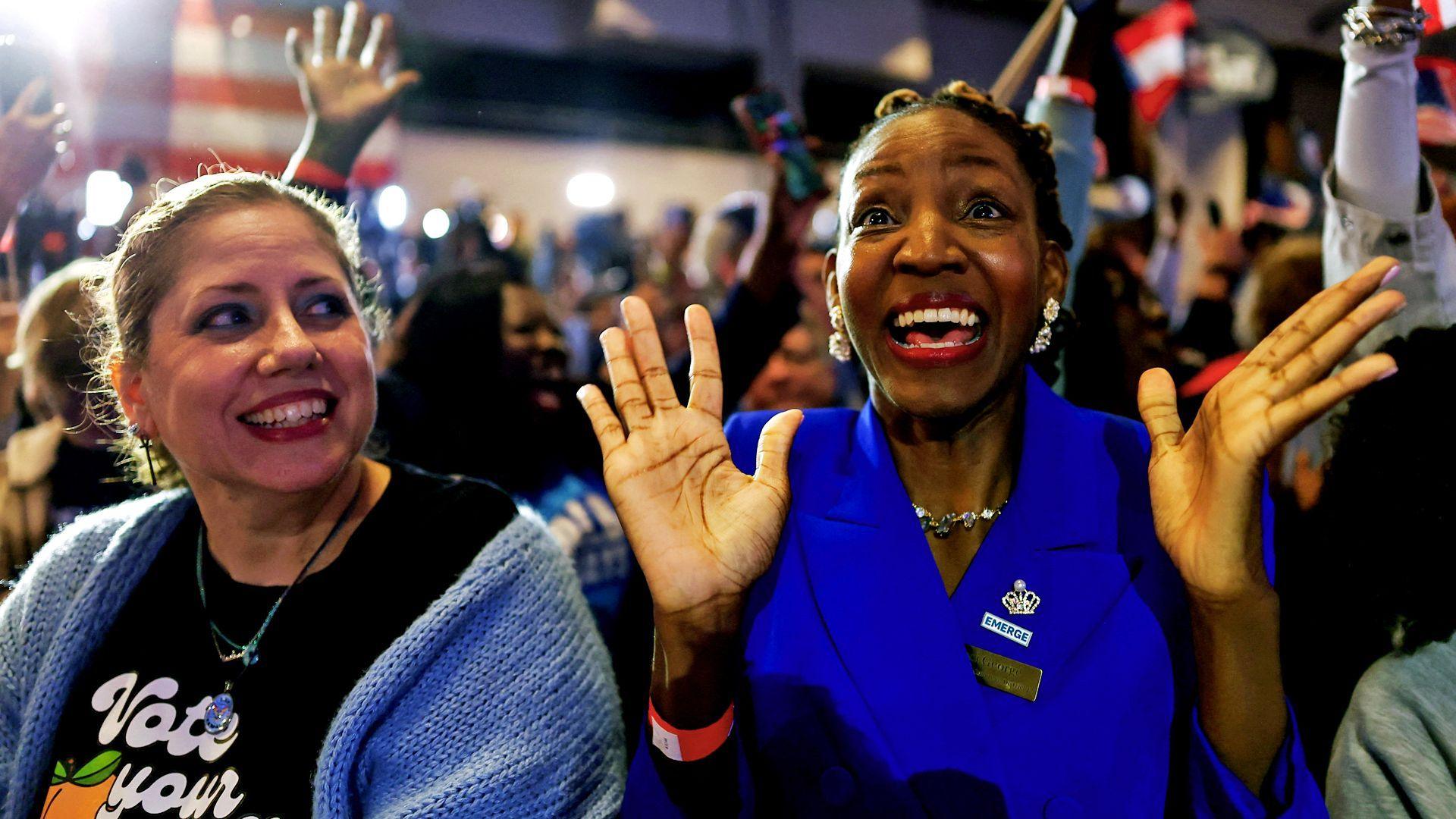
Donald Trump struck a conciliatory tone on election night, telling US media outlets that Democrats did a 'good job' and that he would accept the results and work with the opposition party. It was a remarkable performance of statesmanship from a president who has spent his tenure challenging democratic norms. Yet his measured words cannot obscure what the midterm results truly represent: a decisive repudiation of the political direction Trump has championed and the candidates who carried his endorsement.
The scale of Democratic victories across traditionally Republican strongholds tells the story clearly. Democrats won both chambers of Congress, with projected results showing sizeable swings in Texas, Kansas, Ohio and South Carolina—states that Trump won comfortably two years prior. In Maine, three-decade Republican incumbent Susan Collins, who attempted to distance herself from Trump, was defeated by Democrat Troy Jackson, a logger. The defeat signaled that her strategy could not overcome the broader currents moving against Republican candidates nationwide.
Perhaps most significantly, the midterms produced a series of historic firsts that reflect America's changing political landscape. Hakeem Jeffries is poised to become the first black Speaker of the House. Abdul El-Sayed became the first Muslim elected to the US Senate after triumphing in Michigan, despite Trump invoking 9/11 and calling him a 'jihadist' without evidence. In Georgia, Keisha Lance Bottoms became the first black governor and first woman elected to that office, defeating billionaire businessman Rick Jackson. Chris Pappas made history as the first openly gay man elected to the Senate, celebrating alongside his husband in New Hampshire after defeating former Republican Senator John Sununu. In Texas, Gina Hinojosa became the first Latina elected governor.
Trump acknowledged that certain factors influenced the results, noting that 'Iran was a piece of it'—a reference to the US-Israel war on Iran, which he recognized had impacted consumer prices. He also distanced himself from some Republican candidates, saying they 'were not my friend.' Yet these admissions, while candid, do not change the fundamental verdict: voters rejected the Trump agenda at the ballot box.
The path forward requires Republicans to reckon with what these results mean for their party's future direction. Trump's conciliatory rhetoric on election night was welcome, and his stated willingness to work across the aisle and accept results deserves acknowledgment. However, the Democratic victories, particularly in Trump strongholds, suggest that voters are ready for different leadership and different priorities. For democracy to function, Republicans must internalize this message and chart a course that reflects the nation's actual values rather than Trump's divisive vision.