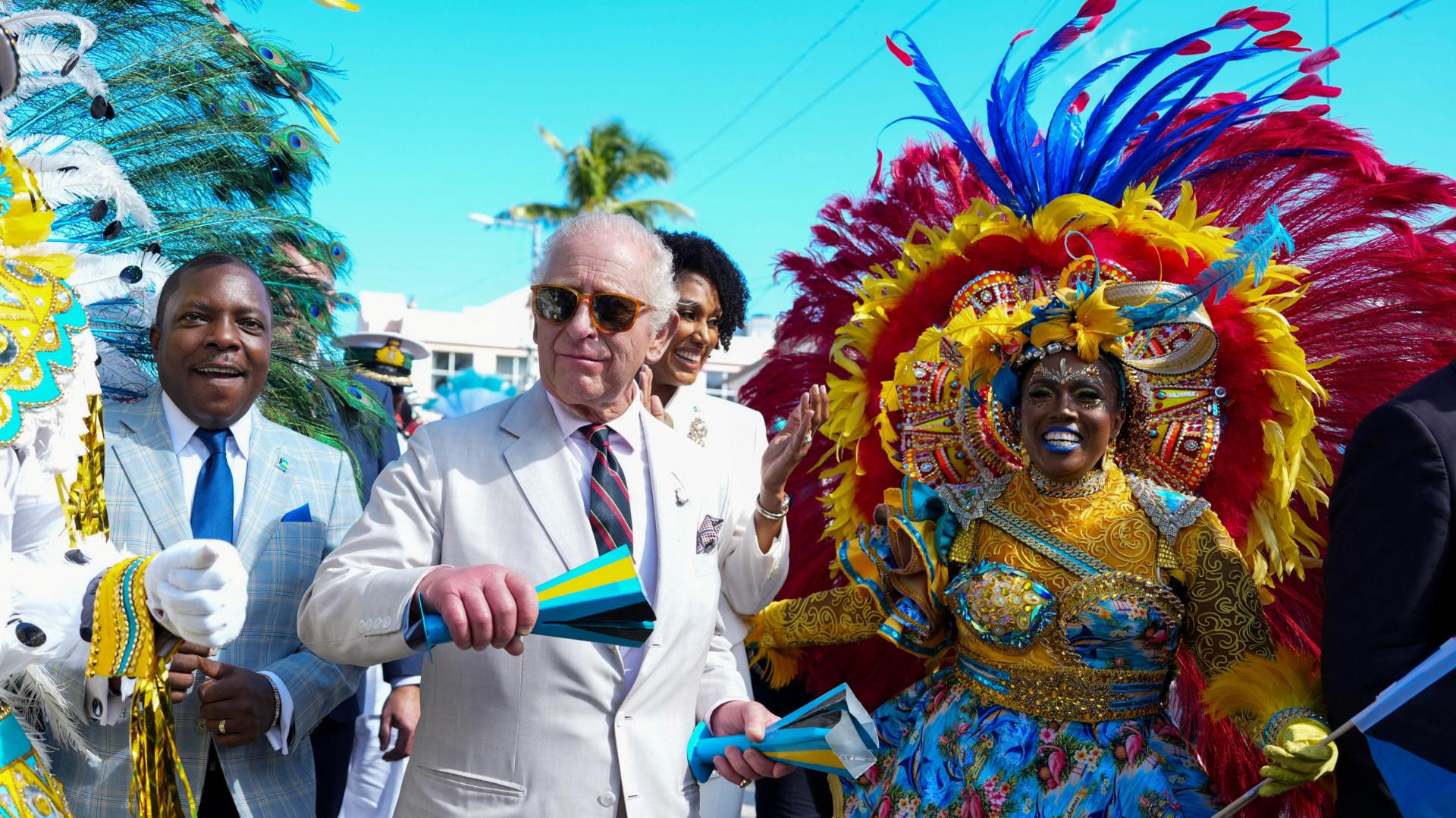
On the second day of his nine-day Caribbean tour, King Charles traded royal formality for maracas and dance moves at a Junkanoo parade in the Bahamas, joining cultural celebrations in a suit and sunglasses while crowds cheered. It was a striking image of a monarch engaging with island life—precisely the kind of symbolic moment designed to strengthen bonds between the Crown and its Caribbean realms. Yet the photograph of the King dancing in feathered headdresses and bright costumes tells only half the story of what unfolded that day, and perhaps exposes the limitations of pageantry when confronting historical injustice.
Just hours before his performance at the Junkanoo, the King laid a wreath at the Flamingo Monument, which commemorates four Royal Bahamas Defence Force Marines killed in May 1980. He visited the Bahamas Boxing Academy, toured the Bonefish Pond National Park to champion climate action, and attended a garden reception at Government House in Nassau. These engagements painted a portrait of a thoughtful monarch invested in the region's future—environment, youth, and institutional strength. Yet this choreography of goodwill was interrupted by an uncomfortable reminder that ceremonial visits cannot simply dance around unresolved historical wounds.
A small protest organized by the Bahamas National Reparations Committee held placards reading 'Pay us what you owe us' near the Junkanoo parade. Police moved the activists on, but their presence refused to be marginalized. Noelle Nicholls, chair of the committee, stated plainly: 'We are demanding an apology for those crimes, and reparations for the harm that was done.' She noted that the protesters' presence 'amidst the pomp and pageantry of the celebrations... are for us also a sombre occasion, because this is the King returning in a way that has still not atoned for the sins of the past.'
The King did acknowledge the issue. On Tuesday, he described the Bahamas' culture as 'born out of darkness' and said it was 'only right' to acknowledge historic injustices. He recognized 'the suffering of the past' and confirmed that Commonwealth leaders will discuss the legacy of slavery at a major summit in Antigua next week. These statements matter. Yet acknowledgment without concrete action risks becoming backdrop for photographs rather than foundation for change.
The history of the Junkanoo itself—believed to have emerged from the slave trade when enslaved people were given time off to mark Christmas—underscores the weight of this moment. The King can dance at cultural celebrations and champion environmental protection, but the Bahamas National Reparations Committee's demands will not disappear into cheers and pageantry. As the King continues his tour to Guyana and then Antigua and Barbuda for the Commonwealth summit, the real test will be whether this visit produces anything beyond elegant symbolism: whether Commonwealth leaders actually commit to meaningful discussion of reparations, and whether the Crown moves from acknowledging suffering to addressing its consequences.