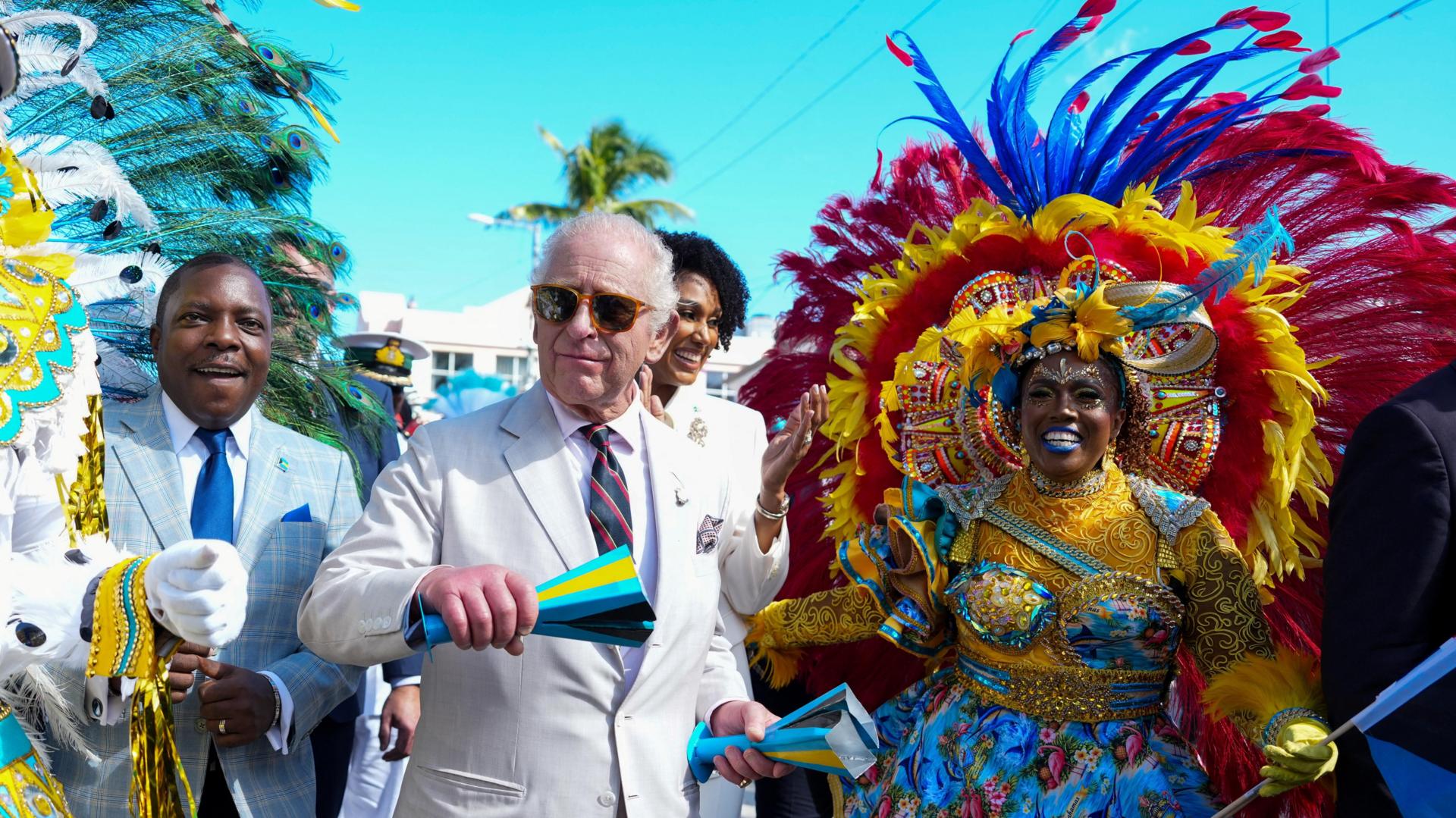
King Charles danced with maracas at a Junkanoo carnival in the Bahamas on the second day of his nine-day Caribbean tour. Dressed in a suit and sunglasses, he joined parade dancers and crowds cheered as he held maracas in the colours of the Bahamas flag. The Junkanoo is a cultural event believed to have emerged from the slave trade when enslaved people were given time off to mark Christmas.
Earlier that day, Charles paid respects at the Flamingo Monument, which commemorates four Royal Bahamas Defence Force Marines killed when Cuban MiG fighter aircraft sank HMBS Flamingo in May 1980. He visited the Bahamas Boxing Academy, where young fighters aged eight to 18 train, and watched two children spar.
Charles also toured Bonefish Pond National Park, a 1,235-acre mangrove wetland that was once a rubbish dump. He walked a new boardwalk and spoke with students doing field work in the wetlands. Joanne Smith, president of the Bahamas National Trust Council, said the King's presence was "really significant" for their conservation efforts.
A small group of protesters from the Bahamas National Reparations Committee gathered near the parade holding placards reading "Pay us what you owe us". Police moved them on. Noelle Nicholls, chair of the committee, said protesters were demanding "an apology for those crimes, and reparations for the harm that was done," describing the visit as "a sombre occasion, because this is the King returning in a way that has still not atoned for the sins of the past."
Charles acknowledged "the suffering of the past" and "historic injustices" linked to the slave trade on his arrival Tuesday. He has confirmed Commonwealth leaders will discuss slavery's legacy at a summit in Antigua next week. The King's tour continues in Guyana on Thursday with a focus on environment and biodiversity.