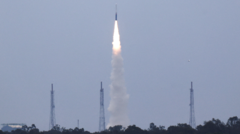
Skyroot Aerospace, India's first space-tech unicorn, achieved a major milestone by launching Vikram-1 on Saturday, marking the nation's first commercial orbital rocket. The private space company cleared a regulatory hurdle that had stalled the Indian commercial space sector for years.
The Vikram-1 launch represents a watershed moment for India's emerging private space industry. Until recently, the Indian Space Research Organisation (ISRO) maintained a near-monopoly on launches. Skyroot's success opens the door for a new wave of domestic commercial operators competing in an increasingly crowded global launch market.
The achievement carries geopolitical weight. India joins a select group of nations with private orbital launch capabilities, alongside the US, China, and Europe. SpaceX's Falcon 9 dominates global commercial launch, handling roughly 60 percent of orbital launches in 2023. India's private sector now positions the country as a serious contender in space commerce, particularly for smallsat missions across Asia.
Skyroot secured unicorn status after raising $60 million in Series B funding, making it India's highest-funded space startup. The company targets rapid launch cadence and lower costs than ISRO's government-operated rockets. Vikram-1 can carry satellites up to 570 kilograms to low Earth orbit, fitting the growing demand for affordable smallsat launches.
This launch aligns with India's broader space ambitions. PM Modi has championed private sector participation, issuing new licensing frameworks to accelerate commercial spaceflight. The move mirrors China's approach with companies like iSpace and OneSpace, which launched privately-funded rockets years earlier.
For Skyroot, Vikram-1 validates years of development and regulatory negotiation. Subsequent launches will define whether the company can capture meaningful market share against established players. The Indian space economy, currently valued at roughly $9 billion, projects exponential growth as private launch providers reduce costs and increase accessibility for satellite operators.