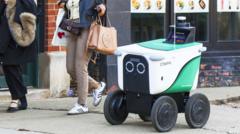
Delivery robots now face organized pushback across American cities as residents and local governments grow frustrated with the autonomous vehicles cluttering sidewalks and creating safety hazards.
Several municipalities have implemented bans or strict regulations on robot deployments, citing concerns about pedestrian congestion and accessibility for disabled users. Protest groups have formed in cities including San Francisco and Pittsburgh, where residents complain that robots obstruct wheelchair ramps and force people into streets to navigate around them.
The backlash reflects a broader tension between tech innovation and urban livability. Companies like Waymo, Amazon's Zoox, and Starship Technologies have aggressively expanded their fleets, treating public sidewalks as de facto delivery infrastructure without formal coordination with city planners or disability advocates.
"We had to get out of the way" became a rallying cry for protesters frustrated by the robots' intrusion into pedestrian spaces. Advocates for people with disabilities have been particularly vocal, arguing that autonomous delivery vehicles exacerbate existing accessibility problems by monopolizing sidewalk space that wheelchair users and visually impaired pedestrians already struggle to navigate.
Local governments are responding. Several cities have capped the number of active robots, required companies to carry liability insurance, or banned operations entirely during peak pedestrian hours. San Francisco's Department of Mobility launched a permit system after complaints mounted. Los Angeles explored similar restrictions.
The conflict underscores a pattern in tech rollout. Companies deploy first, ask permission later, betting that scale and sunk costs will override local resistance. This model works until organized communities push back.
Robot delivery companies argue their services reduce traffic congestion and emissions compared to traditional delivery vans. They point out that the technology remains in early stages and operations will improve. But that argument carries less weight with residents already contending with sidewalk clutter from scooters, bikes, and ads.
The delivery robot wars reveal how tech companies must now navigate not just regulation but genuine grassroots opposition. Innovation without community input creates friction. Cities increasingly demand a seat at the table.