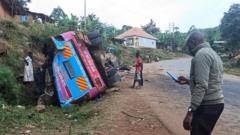
Uganda's Ministry of Education suspended all school trips nationwide following a catastrophic bus crash that killed 20 pupils near Fort Portal in western Uganda. The accident ranks among the deadliest incidents involving children on Ugandan roads in recent memory.
Road fatalities plague Uganda consistently. Thousands die annually on the nation's highways, yet incidents claiming this many young lives remain rare enough to trigger sweeping policy responses. The suspension affects educational institutions across all regions and remains in effect pending a full investigation into the crash's cause.
Officials have not released details on the bus operator's safety record or whether mechanical failure, driver error, or road conditions contributed to the disaster. The Ministry's decision to halt all school excursions reflects both the severity of the incident and growing public pressure to address transportation safety in educational settings.
Uganda's road infrastructure and vehicle maintenance standards have long raised safety concerns among international observers. The country experiences frequent accidents on highways connecting major cities and rural regions. School transport represents a particularly vulnerable sector, as many institutions rely on aging buses operating on poorly maintained roads.
The suspension will disrupt educational activities nationwide, potentially affecting field trips and extracurricular activities that depend on student transport. Schools must now obtain clearance from the Ministry before resuming any off-campus travel.
This tragedy adds to Uganda's grim road safety statistics and underscores the need for stricter enforcement of vehicle standards and driver qualifications. Investigations into the crash may reveal systemic failures in transport regulation that extend beyond school buses to public transit systems serving the general population.