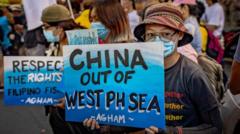
The Philippines lodged a formal complaint against China Daily after the state media outlet published an AI-generated video depicting a monkey wearing Philippine traditional clothing while singing claims to the South China Sea. Manila's government branded the content racist and inflammatory, escalating tensions between the two nations over one of Asia's most disputed maritime territories.
The video, created using artificial intelligence, featured the monkey performing what appeared to be a nationalist song asserting China's territorial claims. Philippine officials viewed the imagery as deliberately dehumanizing and offensive, using animal representation to mock the country's sovereignty position.
China Daily, a major English-language publication controlled by the Chinese government, faced immediate backlash for distributing the content. The Philippines demanded clarification and a response from Beijing, framing the incident as part of a broader pattern of inflammatory rhetoric surrounding South China Sea disputes.
The controversy reflects deepening friction between Manila and Beijing over maritime boundaries. The two countries clash repeatedly over fishing rights, resource extraction, and military presence in waters claimed by multiple nations including Taiwan and Vietnam. The Philippines has increasingly aligned with the United States and its allies on these issues, creating a strategic standoff with China.
AI-generated content has become a flash point in international relations. The technology allows creation of provocative material with speed and scale that traditional media cannot match. This incident demonstrates how automated video production can amplify diplomatic tensions when deployed without editorial restraint.
Philippine President Ferdinand Marcos Jr.'s administration has adopted a more assertive stance on South China Sea claims compared to his predecessor. The government regularly protests Chinese activities in disputed zones and coordinates with Western allies on freedom of navigation operations. This monkey video controversy handed Manila another opportunity to publicly rebuke Beijing's tactics while rallying domestic support.
The dispute underscores how information warfare complements physical posturing in contested waters. Both nations use media, social platforms, and now AI tools as weapons in their competition for regional influence and legitimacy.