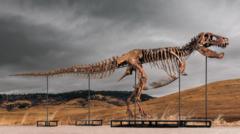
A Tyrannosaurus rex skeleton fetched a record price at Sotheby's New York auction house, becoming the most expensive dinosaur ever sold. The fossil, preserved from an animal that walked Earth 67 million years ago during the Late Cretaceous period, shattered previous auction records for prehistoric remains.
The sale underscores booming demand among wealthy collectors and institutions for authenticated dinosaur specimens. T. rex skeletons command premium prices due to rarity, completeness, and scientific value. Few intact examples exist in private hands, making each sale a major event in the paleontology and luxury collectibles markets.
Sotheby's positioned the specimen as exceptionally well-preserved, with significant portions of the original bone structure intact. Such completeness matters enormously for both scientific research and auction valuations. Museums and private collectors compete fiercely for these pieces, driving prices to levels once unimaginable in the field.
The record reflects broader trends in alternative investments and high-net-worth collecting. Dinosaur fossils occupy a unique space between natural history artifacts and blue-chip investments, appealing to collectors who view them as tangible assets with inherent scientific prestige. Recent years have seen prices accelerate as more ultra-wealthy buyers enter the market.
This particular sale generates renewed conversation about fossil ownership and whether such specimens should reside in public institutions rather than private collections. Scientific researchers often face challenges accessing privately held fossils, potentially limiting paleontological study. The auction-house market for dinosaurs remains largely unregulated, allowing specimens to move freely between collectors.
The T. rex's new owner joins an exclusive club of dinosaur collectors. Its acquisition represents a significant moment in both natural history commerce and paleontology's relationship with the private sector.