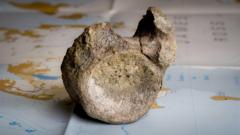
A researcher at the University of Manchester has identified a dinosaur bone that spent nearly four decades sitting in a museum drawer, unrecognized for what it was. The fossil is part of a Titanosaur's tail and was collected during an Antarctic expedition in 1985.
The bone remained catalogued but unexamined until recently, when scientists properly analyzed its origins. Titanosaurs rank among the largest land animals ever to walk Earth, with some species stretching over 100 feet long. Their fossils appear rarely in Antarctica, making this discovery particularly valuable for understanding prehistoric ecosystems in the southernmost continent.
The specimen offers fresh data on Titanosaur distribution and adaptation to extreme environments. Antarctica wasn't always the frozen wasteland it is today. During the Mesozoic Era, the continent supported diverse animal life in a warmer climate. Finding Titanosaur remains there expands the geographic range of these giants and reveals how widespread they truly were.
The discovery highlights how many paleontological treasures sit in museum collections, waiting for proper examination. Budget constraints and staff limitations often mean specimens get stored without thorough analysis. This bone escaped notice for decades simply because no one had examined it closely enough. Digital databases and renewed research efforts have started changing this pattern, allowing scientists to catalog and study long-forgotten fossils.
The find reinforces Antarctica's importance as a paleontological frontier. The continent holds some of Earth's best-preserved fossils thanks to its isolated location and harsh conditions that slow decomposition. Future Antarctic expeditions and archival reviews will likely turn up more overlooked specimens, potentially reshaping understanding of how prehistoric creatures lived and migrated across a very different planet.