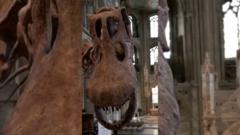
An Argentinian geologist has identified the first dinosaur ever discovered in Antarctica, marking a watershed moment for paleontology on the frozen continent. Eduardo Olivero made the breakthrough identification of fossils he originally unearthed in 1986, decades after the initial excavation.
The discovery reshapes understanding of dinosaur distribution across Earth's landmasses during the Mesozoic Era. Antarctica's extreme isolation and inhospitable climate have long made fossil hunting there nearly impossible, leaving the continent largely absent from the global dinosaur fossil record. This find proves that dinosaurs inhabited Antarctica before it became the ice-locked landmass we know today.
The significance extends beyond simple geographic novelty. When dinosaurs roamed Antarctica, the continent occupied a warmer position within the supercontinent Gondwana and featured temperate ecosystems capable of sustaining large reptiles. Understanding Antarctic dinosaur fauna helps paleontologists reconstruct ancient climate patterns, continental drift, and how prehistoric creatures adapted to varied polar environments.
The delay between discovery and identification underscores challenges inherent to Antarctic research. Harsh conditions, limited resources, and logistical barriers complicate fieldwork and specimen analysis. Many fossils collected decades ago remain in museum collections awaiting formal study.
This identification opens new research avenues. It encourages future expeditions to Antarctica's remote geological formations, where undocumented species likely remain buried. The find also strengthens Argentina's role in polar paleontology, building on the nation's established expertise in South American dinosaur discoveries.
The specimen joins a growing catalog proving that prehistoric life flourished across every continent. For the paleontological community, Antarctica transitions from a blank space on the dinosaur map to an active frontier demanding further exploration and analysis.