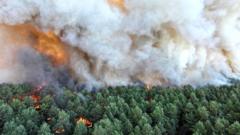
A massive wildfire burning south of Paris has prompted France's interior minister to suspect arson, marking an unusual escalation for the typically temperate region. The blaze forced authorities to deploy firefighting aircraft from southern France, a rare measure that underscores the fire's severity and the country's stretched emergency resources.
The minister's suggestion of deliberate ignition signals concern about potential criminal activity amid rising temperatures across Europe. Wildfires in the Paris region remain uncommon compared to the Mediterranean zones that historically bear the brunt of summer fire seasons. The decision to mobilize planes normally stationed in the drier, hotter south reveals how acute the threat has become.
French authorities have not yet released definitive evidence of intentional setting, but the minister's public statement hints at an active investigation into the fire's origins. The timing coincides with broader European heat waves that have intensified wildfire risks even in areas not traditionally vulnerable to such disasters.
This incident reflects a shifting climate reality across France. As temperatures climb, fire danger spreads northward into regions with less developed firefighting infrastructure and fewer pre-positioned resources. The deployment of southern assets to contain a northern fire illustrates how climate change is stretching emergency response systems.
The wildfire comes as France grapples with increased weather volatility. If authorities confirm arson, it would add a troubling criminal dimension to an already dangerous natural threat. Officials continue monitoring the blaze's spread and adjusting containment strategies in real time.