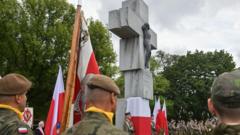
Polish Prime Minister Donald Tusk announced plans for a memorial honoring victims of World War Two killings attributed to Ukrainian nationalists, reigniting a historical dispute that has strained Warsaw-Kyiv relations for decades.
The pledge centers on mass killings of Polish civilians during the war, a period both nations view through sharply divergent historical lenses. Poland frames these deaths as genocide perpetrated by Ukrainian nationalist groups. Ukraine contests this characterization, presenting the violence as part of broader wartime chaos and mutual conflict between populations.
This memorial announcement arrives amid Poland's delicate balancing act between NATO commitments to Ukraine and domestic historical grievances. Warsaw has been a stalwart military and diplomatic supporter of Kyiv since Russia's 2022 invasion, yet Polish public opinion remains sensitive to World War Two narratives that emphasize Ukrainian responsibility for civilian deaths.
Tusk's statement signals that Poland intends to keep these historical claims visible in public memory, despite current geopolitical alignment with Ukraine. The move reflects deeper tensions within Eastern European politics, where national historical narratives often compete rather than align. Poland views memorialization as an act of historical justice. Ukraine worries such gestures risk rewriting wartime complexity into nationalist blame.
The timing matters. Poland currently chairs EU presidency while maintaining its pro-Ukraine stance militarily. Announcing the memorial preserves Polish historical claims without breaking security partnerships, though it risks reopening wounds that both capitals prefer managed quietly.
Similar disputes have flared across the region. Lithuania, Latvia, and Ukraine have clashed over competing WWII narratives. These unresolved historical questions persist because they touch national identity and geopolitical legitimacy in ways contemporary diplomacy struggles to untangle.