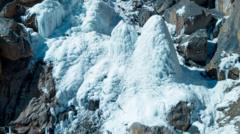
Himalayan mountain villages in India are building artificial ice pyramids to secure water supplies for spring irrigation. Farmers in regions like Ladakh have engineered cone-shaped structures that trap winter snow and ice at high altitudes, slowing the melt cycle to release water when crops need it most, typically March through May.
The innovation addresses a critical water crisis. Climate change has accelerated natural glacier retreat across the Himalayas, leaving agricultural communities without reliable spring runoff. Traditional irrigation schedules depend on predictable snowmelt, but warmer temperatures have compressed the melt period, creating water shortages during peak planting season.
The artificial glaciers work by design. Engineers construct the pyramids from snow and ice mixed with debris, positioning them in shaded valleys where temperatures stay cold enough to preserve the structure through winter. The dark material absorbs minimal heat, while the pyramid shape maximizes volume while minimizing surface exposure. As spring arrives and temperatures rise, the ice melts gradually, feeding streams and irrigation channels.
The technique emerged from traditional practices but gained prominence through NGO partnerships and government support. Organizations like the Indian Institute of Technology Bombay have refined the engineering, while state agricultural departments promote construction. Individual farmers and village cooperatives now build these structures, treating them as essential infrastructure.
The pyramids store millions of gallons of water, directly benefiting downstream farms. A single structure can release water for weeks, extending the irrigation window and protecting crops from frost damage during unpredictable spring weather. Farmers report increased yields on protected fields.
The solution remains hyperlocal but scalable within high-altitude regions facing similar climate impacts. Ladakh's success has prompted interest across Kashmir and Himachal Pradesh, where glacial retreat threatens livelihoods. The approach requires minimal technology investment, relying instead on community labor and seasonal ice availability.
This adaptation reflects how agricultural communities worldwide adapt to climate disruption through low-cost, locally rooted innovation rather than waiting for broader policy solutions.