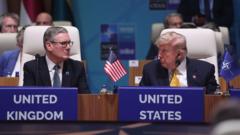
UK Prime Minister Keir Starmer confirmed he will maintain regular contact with President Donald Trump following their meeting at NATO's summit in Turkey. Starmer reported that Trump extended well-wishes during the gathering of alliance leaders, signaling an intent to preserve diplomatic channels between London and Washington despite historical tensions between their respective political movements.
The statement reflects Starmer's pragmatic approach to managing the UK-US relationship, a cornerstone of British foreign policy. Trump's implicit endorsement at the NATO meeting carries weight given his skepticism toward the alliance during his first term, when he frequently criticized European members for defense spending shortfalls. His presence at the summit and cordial exchange with Starmer suggest a potential shift in tone, though Trump's broader NATO stance remains unclear.
Starmer's emphasis on staying connected with Trump addresses growing concerns among Labour figures about transatlantic relations. The UK prime minister, who has maintained critical distance from Trump historically, now faces the political reality of engaging with a returning US administration. His pivot toward regular communication demonstrates the necessity of bipartisan pragmatism in governing, particularly regarding NATO's eastern flank, intelligence sharing, and trade negotiations.
The meeting occurs as Europe collectively reassesses its security posture and NATO readiness. Trump's willingness to engage constructively at the NATO summit, rather than openly confronting allies as he did previously, suggests possible recalibration of his approach to collective defense. Starmer's confirmation of ongoing contact signals the UK intends to be a bridge between Washington and European capitals, leveraging Britain's special relationship with the US while advancing European security interests.
This diplomatic positioning establishes groundwork for potential collaboration on defense spending commitments and strategic alignment in contested regions, particularly the Middle East and Indo-Pacific.