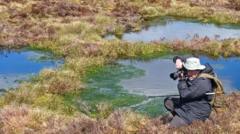
Welsh scientist Alistair Wakeham has spent decades transforming degraded peatland across the UK, earning the nickname "The Bogfather" for his tireless restoration work. Peatlands store twice as much carbon as forests, making them critical buffers against climate change, yet they have been systematically drained and damaged over centuries.
Wakeham's approach combines traditional ecological knowledge with modern conservation techniques. His teams rewet drained bogland, remove invasive species, and replant native vegetation to restore these carbon-rich ecosystems. The work has expanded across Wales, Scotland, and northern England, with projects showing measurable reductions in carbon emissions and improved biodiversity.
Peatlands cover just 3 percent of global land but hold 30 percent of the world's soil carbon. When damaged, they release massive amounts of CO2 into the atmosphere. Restoring them doesn't just sequester carbon. It also improves water quality, supports rare wildlife, and builds landscape resilience against flooding and drought.
Wakeham's childhood fascination with bog ecosystems evolved into a career mission. He recognized that peatland restoration offers one of nature's most efficient climate solutions, requiring minimal technological intervention compared to other carbon-capture methods. Government funding has increased for these projects in recent years, reflecting growing recognition of peatlands' role in climate strategy.
His work demonstrates that large-scale environmental restoration doesn't demand complex engineering. It demands commitment, scientific rigor, and understanding of how natural systems function. As climate urgency intensifies, figures like Wakeham prove that protecting existing carbon stores often outpaces the effort required to create new ones.