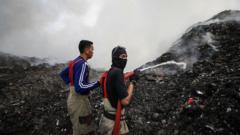
A landfill in Indonesia has burned for over a week, exposing the nation's escalating waste management crisis. Environmental activists view the fire as emblematic of systemic failures in how the country handles garbage disposal.
Indonesia generates roughly 68 million tons of waste annually, yet infrastructure to process that volume remains severely inadequate. Most garbage ends up in overcrowded landfills that lack proper management systems. The extended blaze demonstrates how combustible materials accumulate unchecked in these sites, creating fire hazards that pose serious public health and environmental risks.
The landfill fire releases toxic emissions into the atmosphere, affecting air quality across surrounding communities. Smoke plumes carry particulate matter and volatile organic compounds that contribute to respiratory illness. The burn also accelerates methane release from decomposing waste, compounding local pollution while adding to greenhouse gas concentrations.
Indonesia's waste crisis stems from rapid urbanization and consumption growth that outpaces the government's investment in waste infrastructure. Recycling programs remain underfunded and ineffective. Single-use plastics dominate consumer packaging, and collection systems struggle to divert waste from landfills.
Environmental groups stress that fires like this one will recur without structural reform. Solutions require expanded waste-to-energy facilities, stronger plastic reduction policies, and community recycling programs. The government has pledged improvements, yet implementation remains slow.
The incident underscores how developing nations often bear disproportionate environmental burdens from unsustainable consumption patterns. Indonesia's waste emergency demands urgent policy intervention before more landfills ignite.