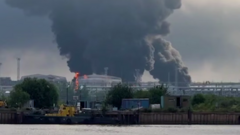
Ukraine struck a major oil terminal in St. Petersburg on Wednesday, targeting critical Russian energy infrastructure that finances Moscow's ongoing war effort. President Volodymyr Zelensky confirmed the operation, characterizing the facility as a key revenue generator for Russia's military operations.
The attack on the oil terminal represents a significant escalation in Ukraine's strategy to degrade Russia's economic capacity to sustain its invasion. By targeting energy infrastructure in Russia's second-largest city, Ukrainian forces have extended the scope of their offensive beyond frontline military targets. The facility processes and distributes crude oil essential to Russia's domestic energy supply and export revenues, both lifelines for the Kremlin's wartime economy.
This strike aligns with Ukraine's broader campaign against Russian oil and gas infrastructure. Over recent months, Ukrainian attacks on refineries, pipelines, and storage facilities have incrementally reduced Russia's capacity to generate foreign currency and fuel its military machine. Each successful operation strains Russia's logistics networks and diverts resources toward reconstruction and defense of energy assets.
The St. Petersburg terminal attack carries symbolic weight beyond its tactical impact. Striking infrastructure deep inside Russia demonstrates Ukraine's growing reach and technological capability, whether through drone strikes or other means. It sends a message that no Russian facility lies entirely beyond Ukraine's operational range, forcing Moscow to spread its already-stretched air defenses thinner across the country.
Russia has not yet publicly acknowledged significant damage from the attack, though Ukrainian officials regularly document strikes through satellite imagery and open-source verification. The operation occurs amid Ukraine's sustained effort to erode Russia's economic foundation, recognizing that degrading the enemy's ability to fund and supply its war effort serves Ukraine's long-term defensive interests.