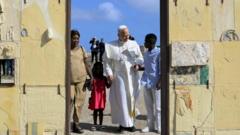
Pope Francis arrived at Lampedusa, Italy's southernmost island and a critical gateway for migrants crossing the Mediterranean, to highlight Europe's responsibility toward displaced people. The pontiff visited a cemetery where he paid tribute to migrants who died attempting to reach European shores, underscoring the human cost of migration crises that persist across the continent.
During his visit, Francis called on European nations to strengthen protections for migrants and asylum seekers. The pope's presence on Lampedusa carries symbolic weight. The island has become ground zero for Mediterranean crossings, receiving thousands of migrants annually who flee conflict, poverty, and persecution in Africa and the Middle East. Lampedusa's communities absorb disproportionate pressure from these arrivals, often lacking resources to manage the influx.
Francis has consistently positioned migration as a moral issue demanding compassionate policy responses. His visit reinforces the Vatican's stance that wealthy European democracies must do more than issue statements. The timing reflects ongoing tension between national border security and humanitarian obligations that define EU migration debates.
The island hosts Italy's largest migrant reception center. Overcrowding, inadequate facilities, and delayed processing characterize conditions there. Italian officials have repeatedly requested EU burden-sharing mechanisms to distribute migrants more equitably across member states. Francis's intervention amplifies calls for systemic reform beyond individual countries managing migration unilaterally.
The pontiff's cemetery tribute acknowledged specific loss. Hundreds of migrants perish annually in the Mediterranean, drowning during dangerous sea crossings. European border policies and Libyan Coast Guard tactics push migrants onto deadlier routes. Francis's visit frames migration not as a border-control problem but as a humanitarian catastrophe requiring coordinated international action. His message targets European leaders to acknowledge responsibility for deaths occurring in waters they could regulate and routes they could make safer through legal pathways.