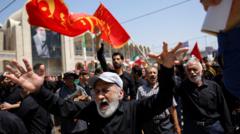
Iran's Supreme Leader Ayatollah Ali Khamenei died this week, drawing massive crowds to Tehran's Grand Mosalla where his body lay in state. The funeral procession marks a pivotal moment for the Islamic Republic, which now faces succession questions after Khamenei's 35-year tenure leading the nation.
Khamenei, who assumed power following the 1989 death of Ayatollah Ruhollah Khomeini, shaped Iran's foreign policy, military strategy, and domestic governance through the Revolutionary Guard and state media apparatus. His death arrives during heightened regional tensions tied to Iran's nuclear program, proxy conflicts across the Middle East, and domestic unrest following protests over women's rights and economic hardship.
The funeral arrangements reflect Iran's religious hierarchy. Khamenei's body remained in state at Grand Mosalla before traveling across Iran and into Iraq, traditionally visiting Shia holy sites. This route underscores Iran's deep ties to Iraqi Shia communities and the transnational nature of Shia Islamic authority.
Iran's system vests supreme authority in a council of clergy rather than a single elected leader, though the Supreme Leader holds veto power over major decisions. The Assembly of Experts, composed of senior clerics, will select Khamenei's successor. Early speculation centered on figures like Ayatollah Mohammad Yazdi and other hardline conservatives positioned within the clerical establishment.
The succession carries geopolitical weight. Khamenei's death occurred amid frozen nuclear talks with Western powers and Israeli military operations in the region. Any new Supreme Leader will inherit these crises alongside domestic pressure over inflation and sanctions-driven economic constraints.
Large funeral attendance reflected both genuine mourning among Khamenei's supporters and state orchestration of civic participation. The scale of crowds demonstrated the regime's organizational capacity while underscoring ongoing division within Iranian society over the Islamic Republic's direction.