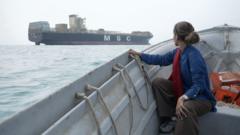
The BBC's visit to Bandar Abbas reveals the human toll of escalating U.S.-Israeli tensions with Iran. The port city, strategically located on the Strait of Hormuz, sits at the epicenter of Middle East geopolitical friction.
Journalists documented seized vessels languishing in Iranian waters, a direct result of tit-for-tat maritime seizures between Iran and Western nations. The impounded ships represent disrupted commerce and stranded crews caught between superpowers. These captures reflect Iran's strategy of leveraging the Strait of Hormuz, one of the world's most critical shipping chokepoints through which roughly one-third of global seaborne oil passes daily.
Beyond the headline-grabbing military posturing, the reporting captured the mundane reality of ordinary Iranians navigating an uncertain present. Local shark fishermen continue their work despite the volatile backdrop, suggesting life persists even under geopolitical pressure. Their resilience underscores how ordinary people absorb the costs of international conflict through economic disruption and daily anxiety.
The "uneasy calm" framing proves revealing. It suggests neither peace nor active warfare, but rather a grinding tension where hostilities simmer below full-scale conflict. Port workers, traders, and fishermen operate in a perpetual state of watchfulness, never certain whether today's stability will hold tomorrow.
The Strait of Hormuz's importance amplifies every incident here. Any sustained disruption to shipping routes triggers global oil price volatility and threatens supply chains worldwide. Iran's control of these waters gives it outsized leverage in negotiations with the West, even as sanctions crush its economy.
The BBC's ground-level reporting punctures the abstract language of international relations. Real ships sit idle. Real workers worry about livelihoods. The strategic implications matter less than the human reality: port cities like Bandar Abbas become pressure points where geopolitical calculation meets economic desperation.