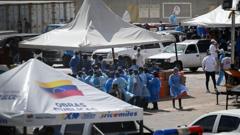
A powerful earthquake struck Venezuela, devastating local infrastructure and forcing families into a grim identification process at improvised facilities. Bodies remain stored outside and in tents as the region's medical and emergency services buckle under the scale of the disaster.
Relatives navigate the chaotic aftermath without adequate resources or organization. Overwhelmed morgues cannot accommodate the volume of casualties, leaving grieving families to search among corpses displayed in temporary structures. The lack of proper facilities has created conditions that compound trauma for those seeking lost loved ones.
Venezuela's already-strained infrastructure, weakened by years of economic crisis and underinvestment, collapsed under the earthquake's impact. Basic services that would normally handle mass casualty events either don't exist or function at minimal capacity. No emergency response system proved robust enough to manage the sudden scale of death and injury.
Local authorities have not announced casualty figures or provided timeline estimates for proper burial and identification procedures. The disaster exposes deep vulnerabilities in the country's ability to respond to natural emergencies. Families face indefinite waits without clear communication about identification protocols or death toll projections.
International aid organizations have not been mentioned as responding to the crisis, leaving local communities isolated during a catastrophic moment. The situation reflects broader patterns of institutional breakdown in Venezuela, where chronic underfunding has eliminated redundancies and emergency capacity across every sector.
The earthquake serves as a brutal reminder that natural disasters strike hardest in regions lacking resources to absorb their impact. Venezuela's families now bear the cost of years of governmental neglect.