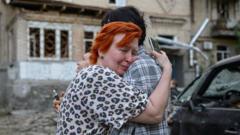
Russia launched its most massive aerial assault on Kyiv in months, killing at least 30 people and striking targets across the Ukrainian capital with unprecedented firepower. The attack deployed the largest number of weapons on the city since the war's escalation, hitting residential areas, infrastructure, and commercial zones over a broad geographic expanse.
Emergency services battled multiple fires across Kyiv following the bombardment. The assault struck apartment buildings and public facilities, forcing rescue operations throughout the night. Ukrainian officials confirmed significant casualties as debris scattered across neighborhoods, with some areas reporting complete destruction of residential blocks.
The scale of the attack underscores Russia's intensified aerial campaign against Ukraine's largest city. Moscow has maintained consistent pressure on Kyiv's infrastructure and civilian population despite Ukrainian air defenses. The barrage employed cruise missiles and drones in coordinated waves, overwhelming defensive systems in certain sectors.
Ukrainian air defense units engaged incoming threats but the sheer volume of ordnance exceeded interception capacity in multiple locations. Military analysts note Russia's strategy targets both civilian morale and Ukraine's ability to sustain urban operations. The attack follows weeks of elevated military activity along multiple fronts.
President Zelensky's office documented the strike's scope, releasing images of damaged neighborhoods and rescue efforts. International observers characterized the assault as part of Russia's broader campaign to degrade Ukrainian civilian infrastructure and inflict maximum casualties in population centers.
This marks a significant escalation in aerial operations against Kyiv, reversing months of relative calm in the capital's airspace. The attack reflects Russia's commitment to sustained pressure on Ukraine's largest city despite international condemnation and ongoing military assistance to Kyiv from Western allies.