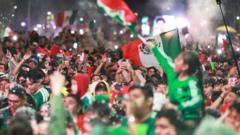
Mexico City erupted Tuesday as over one million fans flooded the streets following Mexico's victory over Ecuador in World Cup play. The massive celebration turned tragic when three people died during the festivities.
The exact circumstances surrounding the deaths remain unclear from available reports, but the incident underscores the risks posed by large-scale public gatherings, particularly in densely populated urban centers. Mexico City, with its history of crowding and infrastructure challenges during major sporting events, faced significant crowd management difficulties as supporters from across the city converged to celebrate the national team's win.
World Cup victories routinely draw enormous crowds in football-obsessed nations like Mexico, where the sport commands cultural and emotional significance beyond athletics. The turnout Tuesday reflected the deep passion Mexican fans hold for their national squad. Such celebrations often occur spontaneously and with minimal coordination, making them inherently unpredictable.
Incidents during large public gatherings, whether sporting events or festivals, frequently result in crowd-related injuries or fatalities. Deaths in these scenarios typically stem from crowd crushes, falls, or accidents that occur when massive numbers of people occupy limited space with inadequate safety measures.
Mexican authorities will likely conduct investigations into what triggered the three deaths and review crowd control procedures for future celebrations. The incident raises broader questions about how cities can safely accommodate the spontaneous, mass public expressions of joy that follow major sports victories. For Mexico's football community, the tragedy tempered what should have been an unambiguous moment of national triumph.