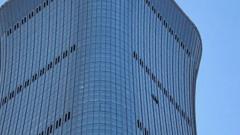
A small aircraft collided with a high-rise tower in Beijing, leaving visible structural damage that Chinese authorities have since worked to conceal. The impact punctured holes in the building's exterior, evidence of a direct strike that state media has largely ignored.
China has offered no official explanation for the collision. State-controlled outlets have scrubbed details from online platforms, and the government has not released incident reports, casualty figures, or investigation findings. The information vacuum mirrors Beijing's pattern of restricting disclosure on aviation accidents and industrial incidents that might reflect poorly on safety oversight.
The collision occurred in one of China's most scrutinized cities, where state surveillance typically documents major events. Yet the absence of coordinated official response suggests authorities are managing the narrative rather than conducting transparent investigation. Independent verification remains difficult given China's control over domestic media.
Aviation incidents in China historically receive limited public disclosure. The 2015 Tianjin port explosion killed over 170 people but faced initial reporting restrictions. Similarly, when a China Eastern Airlines Boeing 737 crashed in Guangzhou in 2022, official statements remained sparse for weeks.
The Beijing tower incident underscores tensions between China's digital surveillance apparatus and its information control mechanisms. While cameras may have captured the collision, state censors control what reaches public view. This selectivity raises questions about whether Chinese regulators are investigating the cause or simply containing the story.
The lack of transparency complicates international aviation safety protocols, which depend on incident data shared across borders. Without official Chinese reports, the global aviation community cannot assess whether the collision reveals systemic safety gaps in Chinese airspace management or aircraft operation.