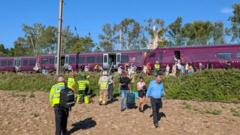
A train collision in eastern England left nearly 90 passengers injured, with more than 30 sustaining serious injuries. Eyewitnesses described a violent impact that threw passengers from their seats, painting a chaotic scene as emergency responders rushed to the scene.
The East of England Ambulance Service confirmed the casualty figures, mobilizing multiple units to treat the injured at the collision site. Passenger accounts revealed the sudden, jarring nature of the crash. Those aboard experienced the full force of the impact, with many thrown violently through train cars. First responders worked to stabilize patients and transport the most critically wounded to nearby hospitals.
The incident underscores ongoing safety concerns around rail operations in the UK. Train collisions, while rare in modern rail systems, carry catastrophic consequences when they occur. The high number of seriously injured passengers suggests a significant impact velocity or collision force. Investigators will examine multiple factors including speed, track conditions, signaling systems, and driver response protocols.
The Railway Accident Investigation Branch typically leads inquiries into such incidents, examining whether mechanical failure, human error, or infrastructure issues contributed to the crash. Survivors' accounts of being thrown from seats indicate passengers likely experienced severe deceleration forces, increasing injury severity.
The ambulance service's rapid deployment of resources and coordination with hospital networks proved critical in managing the mass casualty incident. Local hospitals prepared to receive and treat the injured, with trauma teams standing by. The collision prompted immediate reviews of operating procedures on the affected rail line.
Passengers and staff who witnessed the crash firsthand will provide vital testimony for investigators piecing together the timeline and cause of the collision.